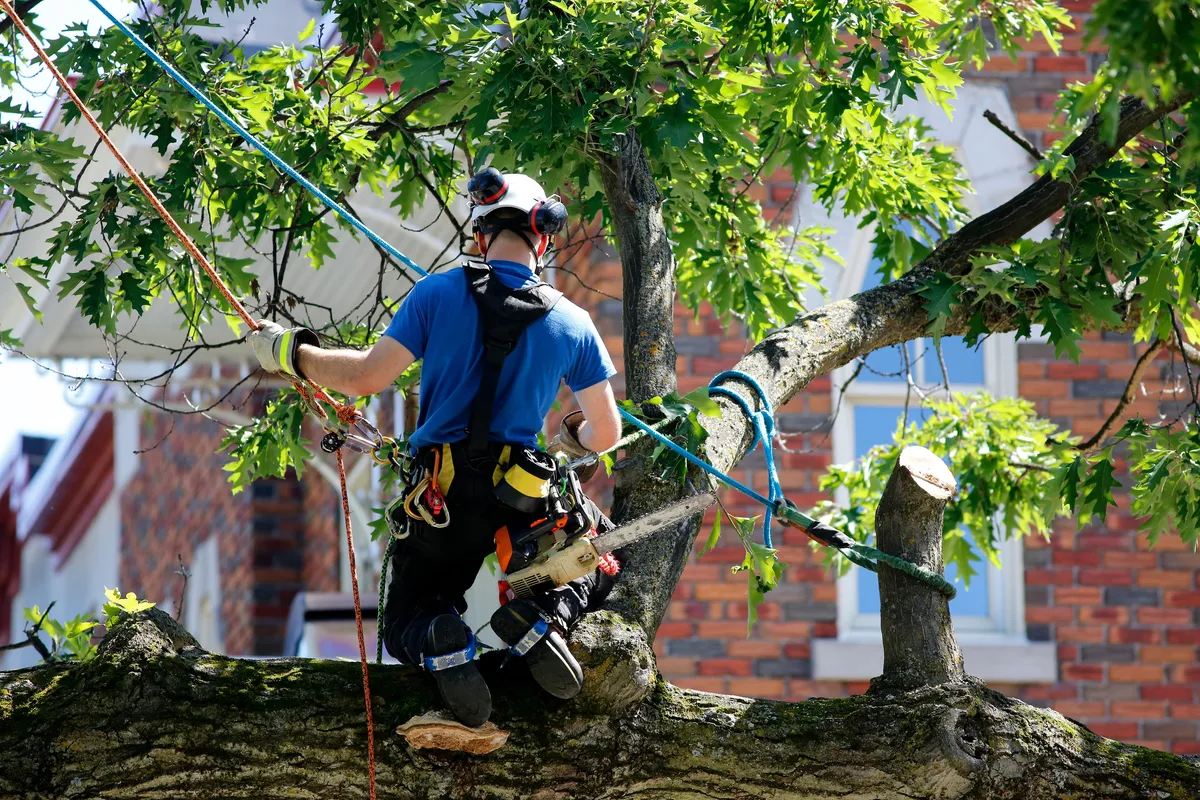
What Does an Arborist Actually Do?
An arborist is a tree specialist — someone trained to assess tree health, diagnose problems, and recommend treatment or removal. Think of them as a doctor for trees. While a tree service crew handles the physical work of cutting, trimming, and removal, an arborist is the person who tells you whether a tree needs treatment, pruning, cabling, or removal in the first place.
A consulting arborist does not sell you tree work. They give you an independent opinion. That is an important distinction. If you call a tree removal company and ask "does this tree need to come down?" they have a financial interest in saying yes. A consulting arborist charges for the assessment itself and has no stake in whether you remove the tree or not. Their job is to give you accurate information so you can make a good decision.
ISA Certification Explained
ISA stands for the International Society of Arboriculture. An ISA Certified Arborist has passed an exam covering tree biology, soil science, pruning standards, disease and pest identification, risk assessment, and tree preservation during construction. To maintain certification, arborists need to earn continuing education credits every three years.
There are several levels of ISA certification:
- ISA Certified Arborist: The standard credential. Covers all aspects of tree care and assessment.
- ISA Tree Risk Assessment Qualified (TRAQ): Additional training specifically for evaluating whether a tree is likely to fail and cause damage. This is the credential you want if you are concerned about a specific tree's safety.
- ISA Board Certified Master Arborist: The highest level. Requires extensive experience and a more rigorous exam. Only a small percentage of arborists hold this credential.
- ISA Certified Arborist Municipal Specialist: Focused on managing trees in urban environments, parks, and public right-of-ways.
For most residential consultations in Charlotte, an ISA Certified Arborist with TRAQ qualification is the right professional to call.
Arborist Consulting Pricing in Charlotte
| Service | Typical Price Range |
|---|---|
| Single tree assessment | $150–$250 |
| Property tree inventory (full property) | $250–$500 |
| Construction site preservation plan | $400–$800 |
| Expert witness / legal consultation | $150–$300/hr |
Most consultations include a site visit, visual assessment, and a written report with photos and recommendations. The report is what you are paying for — it is the document you show to your insurance company, your builder, or your neighbor's attorney. Verbal advice without a written report is less useful and typically costs less, but you have nothing to refer back to later.
When You Need an Arborist
Most Charlotte homeowners never call an arborist until something goes wrong. But there are several situations where a professional assessment saves you money and headaches down the road:
Your Tree Looks Sick
Leaves are yellowing, dropping early, or have spots. Branches are dying back from the tips. Bark is peeling, cracking, or has fungal growths. These are all signs of disease, pest damage, or root problems. An arborist can identify the specific issue and tell you whether treatment will work or if the tree is too far gone. Catching problems early gives you more options and lower treatment costs.
Before Construction or Renovation
If you are building an addition, installing a pool, running new utility lines, or doing any work that involves digging near mature trees, an arborist should review the plans first. Construction is the number one killer of mature trees in Charlotte — and the damage often does not show up for two to five years after the work is done. Cutting roots, compacting soil with heavy equipment, and changing drainage patterns can slowly kill a tree that looked fine during and right after construction.
An arborist creates a tree preservation plan that marks root protection zones, specifies where equipment can and cannot operate, and recommends protective fencing around trees you want to keep. For land clearing projects where you want to save specific trees, this plan is critical.
Tree Disputes with Neighbors
Boundary trees, overhanging branches, root damage to fences or driveways, and shade disputes are common in Charlotte's older, tree-dense neighborhoods. An arborist's report carries weight in mediation and court because it is a professional opinion backed by science. If your neighbor's tree is damaging your property, or if they are threatening to remove a boundary tree, get an arborist involved before things escalate.
Insurance Claims
If a tree damages your property, your insurance company may request a professional assessment. An arborist report can document whether the tree was healthy or had pre-existing defects, which affects who is liable and what is covered. Similarly, if your neighbor's tree falls on your property and you believe they were negligent (knew the tree was dead and did nothing), an arborist's documentation of the tree's condition strengthens your case.
Real Estate Transactions
Buying a home with large, mature trees? An arborist assessment before closing can identify potential problems — like a 100-year-old oak with internal decay that could cost $5,000 or more to remove. Sellers sometimes get arborist reports proactively to reassure buyers that their trees are in good shape. Either way, knowing the condition of large trees on a property is worth the $150 to $500 consultation fee given the potential costs involved.
What to Expect During an Arborist Consultation
Step 1: Scheduling and Prep
When you call, describe the issue and the arborist will give you an idea of what type of assessment is needed. Before the visit, make a note of any specific concerns — which trees worry you, what symptoms you have noticed, and when you first spotted the problem.
Step 2: The Site Visit
The arborist walks your property and examines the trees in question. They look at the canopy (crown density, dead branches, leaf color), the trunk (cracks, cavities, fungal conks, bark condition), the root zone (heaving, circling roots, soil grade changes), and the surrounding environment (nearby construction, drainage, competing vegetation). For risk assessments, they may use tools like a mallet (to sound for internal decay), a resistograph (a drill that measures wood density), or an air spade (to expose roots without damaging them).
Step 3: Discussion
On site, the arborist will explain what they are seeing and give you their preliminary opinion. They will answer your questions and discuss options. This is a good time to ask about treatment costs, removal costs, and timelines so you can plan accordingly.
Step 4: Written Report
Within a few days, you receive a written report. A good arborist report includes: tree species and size, current condition assessment, specific findings (disease, structural defects, root issues), risk rating (if applicable), recommended actions, and photos documenting everything. This report is your reference document for insurance claims, legal proceedings, or contractor instructions.
Common Tree Problems in Charlotte and the Piedmont
Bacterial Leaf Scorch
This is one of the biggest tree killers in the Charlotte area. It affects oaks (especially red oaks and pin oaks), elms, sycamores, and maples. The bacteria, Xylella fastidiosa, blocks the tree's water-conducting vessels. Leaves develop brown, scorched margins in late summer, and the decline gets worse each year. There is no cure. An arborist can confirm the diagnosis with lab testing and help you plan for eventual removal and replacement.
Hypoxylon Canker
Very common on stressed oaks in Charlotte, especially after drought years. You will see dark, crusty fungal mats on the trunk and large branches. By the time the fungus is visible, the tree is usually dead or dying. It is a stress-related disease, so trees that were weakened by construction damage, drought, or root loss are the most vulnerable.
Ambrosia Beetle Attacks
Granulate ambrosia beetles bore into stressed trees, particularly crape myrtles, magnolias, dogwoods, and Japanese maples. You will see tiny sawdust "toothpick" tubes sticking out of the bark. Healthy trees can fight off the beetles, but stressed trees often cannot. An arborist can assess whether the tree has enough vigor to survive and recommend treatment if it does.
Southern Pine Beetle
Loblolly pines are everywhere in Charlotte, and the southern pine beetle is their worst enemy. Infested pines turn brown and die quickly. The beetles spread from tree to tree, so early detection matters. If you have pines with fading green needles or small pitch tubes on the bark, get an arborist out fast. Removing infested trees promptly can save the surrounding pines.
Root Rot from Poor Drainage
Charlotte's clay soils hold water, and many neighborhoods have drainage problems. Standing water around tree roots leads to Phytophthora root rot and Armillaria root rot, both of which weaken the root system and can cause otherwise healthy-looking trees to topple. An arborist can identify early root rot symptoms and recommend drainage corrections before the tree becomes a hazard.
Charlotte's Urban Canopy Goals
The City of Charlotte has an urban tree canopy that covers roughly 47% of the city's land area — one of the highest percentages for a major US city. The city has a stated goal of maintaining and expanding this canopy because of the benefits it provides: lower temperatures, better air quality, stormwater absorption, and property value increases.
Charlotte's tree ordinance, the Charlotte Tree Advisory Commission, and programs like TreesCharlotte all work toward canopy preservation. For homeowners, this means that large, healthy trees on your property are not just an aesthetic asset — they are part of a broader city-wide effort. An arborist can help you keep those trees healthy and deal with problems before they require removal.
Heritage and Specimen Trees
Some trees in Charlotte are locally significant due to their size, age, species rarity, or historical connection. The Myers Park neighborhood has massive willow oaks over 100 years old. Fourth Ward has trees that predate the Civil War. If you have a tree that might qualify as a heritage tree, an arborist can assess its condition and recommend a long-term care plan to keep it standing for future generations.
Tips for Charlotte Homeowners
Getting the Most from an Arborist Visit
- Take photos of the issue before the visit. If leaves are dropping or you see mushrooms at the base, snap pictures while the symptoms are visible.
- Know your trees. At minimum, know how many trees you want assessed and roughly how big they are. The arborist will identify the species, but your sense of the scope helps them prepare.
- Ask for a written report, even if it costs a little more. A verbal opinion has no documentation value for insurance, legal, or construction purposes.
- Ask about the arborist's ISA number. You can verify their certification on the ISA website. If they do not have a number, they are not ISA certified regardless of what they claim.
Finding a Consulting Arborist vs. a Tree Service Arborist
There is a difference between an arborist who works for a tree removal company and a consulting arborist. A tree service arborist is typically employed by the company and may be involved in estimating and selling work. A consulting arborist works independently and gets paid for the assessment itself, not for selling services. For insurance claims, legal disputes, and construction projects, an independent consulting arborist's opinion carries more weight because they have no conflict of interest.
When to Skip the Arborist and Call a Tree Service Directly
You do not need an arborist for everything. If a tree is clearly dead, if you just want a healthy tree removed because of its location, or if you need routine trimming and pruning, call a tree service company directly. An arborist is most valuable when you are not sure what is wrong, when there is a dispute or insurance claim, when construction is planned near trees, or when the tree is large and valuable enough that the wrong decision could cost you thousands.
Protecting Trees During Home Projects
- Mark the drip line (outer edge of the canopy) of any tree you want to keep. Nothing should be parked, stored, or dug within that area.
- Tell your contractor explicitly that protected trees are off limits. Put it in the contract.
- If heavy equipment must pass near a tree, lay down plywood or mulch paths to reduce soil compaction.
- Do not pile excavated soil against tree trunks. Even a few inches of added soil over roots can suffocate them.
- If roots are cut during excavation, have an arborist assess the damage and recommend treatment.