A big shade tree next to a swimming pool sounds nice in theory. Dappled light over the water, a natural canopy to sit under between swims, leaves rustling in the breeze. In practice, it is a maintenance disaster. Charlotte homeowners with trees near their pools know this better than anyone — the skimming never ends, the roots crack the deck, and the pool chemistry fights you all season long.
If you have decided the tree needs to go, the job is more involved than a standard tree removal. Pool-adjacent removals come with specific challenges that change how the crew works, what they charge, and what you need to do before and after. Here is what to expect.
Why Trees Near Pools Cause So Many Problems
Before getting into the removal process, it helps to understand why trees and pools are such a bad combination. Most of these problems get worse with time, not better.
Leaves and debris in the water. This is the obvious one. A single mature oak can drop 200,000 to 500,000 leaves in a season. Even with a pool cover and a good skimmer, a large portion of those leaves end up in your pool. Leaves that sink to the bottom stain the plaster or vinyl liner. Leaves that sit in the skimmer basket clog the pump. Pine needles are even worse — they slip through skimmer baskets, clog return lines, and settle into every crack and crevice. During Charlotte's spring pollen season, a poolside pine tree coats the water surface in a thick yellow film that clogs filters within hours.
Root damage to pool structures. Tree roots grow toward water. Your pool is a giant underground water source, and roots will find it. The roots themselves do not punch through a properly built concrete or fiberglass pool shell — but they do not need to. They grow along the outside of the shell, under the coping, through expansion joints, and into the plumbing lines. Over time, root pressure cracks pool decking, lifts coping stones, displaces the skimmer housing, and can shift the plumbing enough to cause leaks. The same root problems that damage foundations affect pool structures, and the damage is often harder and more expensive to repair.
Shade kills the water chemistry. Pools need sunlight. UV light from the sun breaks down chloramine compounds (the stuff that makes pools smell like chlorine and irritates eyes). A heavily shaded pool requires more chemical treatment to stay balanced. Shade also keeps the water cooler, which sounds appealing in July but extends into the shoulder months when you want the pool warm enough to swim. If a large tree canopy covers 50 percent or more of the pool surface, you will spend noticeably more on chemicals and heating.
Insects and animals. Trees near pools attract birds, squirrels, and insects — all of which end up in the water. Overhanging branches give birds a perch directly above the pool. Acorns, berries, and seeds drop in. Caterpillars and beetles fall off leaves. During Charlotte's summer, the combination of water and a shady tree canopy also creates ideal conditions for mosquitoes in stagnant areas around the pool deck.
Protecting the Pool During Removal
A tree falling into a swimming pool is exactly the catastrophe it sounds like. Even a large branch dropping into the water can crack tile, damage the liner, dent a fiberglass shell, or break a skimmer. This is why pool-adjacent tree removal is not a DIY project and not a job for the cheapest crew you can find.
Covering the pool. Before any cutting starts, the pool needs to be protected. A standard safety cover is not enough — it will not stop a heavy branch from punching through. Experienced tree crews use thick plywood sheets or heavy-duty tarps layered over the pool opening. Some companies bring rubber mats designed for ground protection that can absorb impact. The goal is to create a surface that can handle a falling branch without transferring the force to the pool shell below.
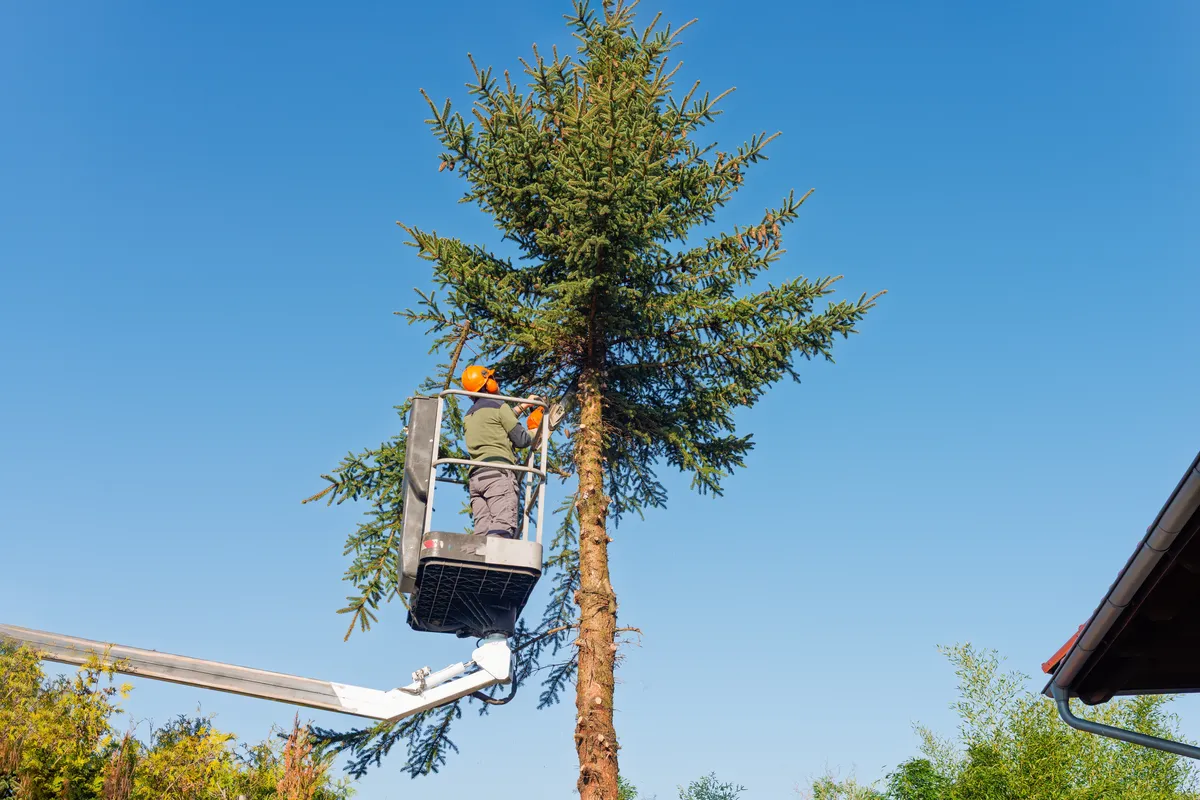
Equipment access is the biggest challenge. Pools are typically in backyards surrounded by fencing, deck, and landscaping. Getting a bucket truck, crane, or even a large chipper into position may not be possible. Many pool-adjacent removals are done entirely with climbers — arborists who work from ropes in the tree canopy, cutting sections and lowering them on rigging lines with precise control over where each piece lands.
If the tree is large enough to require a crane (anything over 60 feet or in a position where it cannot be climbed safely), the crane may need to be positioned in the front yard or a neighbor's property, reaching over the house to lift sections out. This adds significant cost but is sometimes the only safe option.
Directional felling is not an option. With a normal tree removal, the crew can often fell the tree in one piece in a chosen direction. Next to a pool, there is no safe direction to drop an entire tree. Every section has to be cut, controlled, and lowered piece by piece. This is slower and more labor-intensive than standard removal, which is why it costs more.
Stump Grinding Near Pool Plumbing
After the tree is down, you are left with a stump — and this is where things get tricky near a pool. Stump grinding uses a machine with a spinning carbide-tipped wheel that chews through wood and roots. It is effective but aggressive. The grinder does not know the difference between a tree root and a PVC pool plumbing line buried six inches underground.
Pool plumbing in Charlotte is typically buried 18 to 24 inches deep, but that depth is not consistent. Plumbing runs near the pool equipment pad, along the pool perimeter, and out to the main drain. If the tree stump is within 5 feet of any pool plumbing, the grinding needs to be done carefully and often partially by hand.
A good approach is to have the pool plumbing lines located before grinding starts. Some tree companies use ground-penetrating radar or simple probe rods to find pipe runs. If you have the original pool construction plans, those show the plumbing layout — but be aware that the actual installation may not match the plans exactly.
For stumps very close to pool plumbing, the grinder operator will go shallow — grinding only the top portion of the stump and major roots rather than chasing every root down to 12 inches. The remaining wood below ground will decay on its own over several years. This is a compromise, but it beats a $3,000 plumbing repair.
What It Costs
Pool-adjacent tree removal costs more than the same tree in an open yard. The extra labor for rigging, the need for pool protection, the limited equipment access, and the careful stump grinding all add to the price. For a detailed breakdown of Charlotte pricing, see our tree removal cost guide.
Here are rough price ranges for Charlotte in 2026:
- Small tree (under 30 feet) near pool: $500 to $1,500. These are usually simple even near a pool because the sections are small and light.
- Medium tree (30 to 60 feet) near pool: $1,500 to $4,000. This is where rigging and piece-by-piece removal becomes necessary. Most pool-adjacent removals fall in this range.
- Large tree (over 60 feet) near pool: $3,000 to $8,000+. A large oak, poplar, or pine directly next to a pool may require a crane, which alone can add $1,000 to $2,500 to the job.
- Stump grinding near pool: $200 to $500, depending on stump size and proximity to plumbing. Expect to pay at the higher end if the crew needs to hand-dig around pipes before grinding.
Get at least three quotes. When comparing bids, ask specifically how the crew plans to protect the pool and whether they have done pool-adjacent removals before. A crew that has never worked near a pool may underestimate the difficulty, underquote the job, and cut corners on protection.
What to Plant as a Replacement
Once the tree is out and the stump is ground, you will probably want some greenery back. But this time, pick something that will not cause the same problems. Our guide on the best trees to plant near a pool in Charlotte covers this in detail, but here are the key principles:
Plant far enough away. The new tree should be at least 15 to 20 feet from the pool edge, farther for large-growing species. This keeps roots away from pool plumbing and reduces the amount of debris that falls in the water. The rule of thumb: the mature canopy spread should not overhang the pool.
Pick a clean species. Avoid trees that drop heavy litter — no sweetgums (spiky balls), no large oaks (acorns by the thousands), no pines (needles and sap), no mulberries (staining fruit), and no cottonwoods (cottony seeds that clog filters). Good pool-friendly choices for Charlotte include crape myrtles, Japanese maples, holly varieties, and ornamental grasses or palms for a tropical look.
Choose non-aggressive root systems. Skip species known for surface roots or invasive root growth. Willows, silver maples, sweetgums, and river birch all have root systems that will eventually find the pool. Crape myrtles, dogwoods, and smaller ornamental trees have compact root systems that stay closer to the trunk.
Consider evergreen screening instead. If your main goal is privacy rather than shade, a row of evergreen shrubs like Nellie R. Stevens holly or Green Giant arborvitae planted 15 to 20 feet from the pool gives you screening without the overhead debris. They are also easier to maintain at a manageable height.
Timing the Removal
The best time to remove a tree near a pool in Charlotte is late fall through early spring — November through February. The pool is closed (or at least not in regular use), deciduous trees have dropped their leaves so the crew has better visibility of the canopy structure, and the ground is firmer for equipment. Scheduling in the off-season also tends to be easier since tree companies are less booked than they are after spring storms.
If the tree is a safety concern — dead, leaning, or damaged by a storm — do not wait for the off-season. A dead tree next to a pool is a falling hazard that gets worse with every storm. Get it assessed and removed promptly.
Insurance and Liability
Before any work starts, confirm that the tree company carries both general liability insurance and workers compensation coverage. If a crew member falls into your pool or a branch damages your pool shell, you want their insurance covering the repair, not yours. Ask for a certificate of insurance and verify it is current. Any reputable Charlotte tree company will provide this without hesitation.
On your end, check with your homeowner's insurance about pool-related tree damage. Most policies cover damage from a tree that falls unexpectedly (a storm brings it down), but they may not cover damage from a tree removal gone wrong. If the tree company damages your pool during the removal, their liability insurance should cover it — which is another reason to hire a licensed, insured crew rather than the cheapest option on Craigslist.
The Bottom Line
Removing a tree near a pool is a job that rewards careful planning and experienced crews. The extra cost over a standard removal is money well spent when you consider what it costs to repair a cracked pool shell or replace damaged plumbing. Find a tree company that has done this type of work before, make sure they have a clear plan for protecting the pool, and get the stump grinding done carefully around any buried plumbing lines.
Once the tree is out, you will notice the difference immediately. Less debris in the water, lower chemical costs, more sunlight, and no more worrying about roots cracking the deck. Plant a clean, well-placed replacement tree, and you get the best of both worlds — a shaded pool area that does not fight you every week.
Need a Tree Removed Near Your Pool?
Get a free quote from experienced Charlotte tree service companies who specialize in pool-adjacent removals. Licensed, insured, and equipped to protect your pool throughout the job.
Get a Free Quote