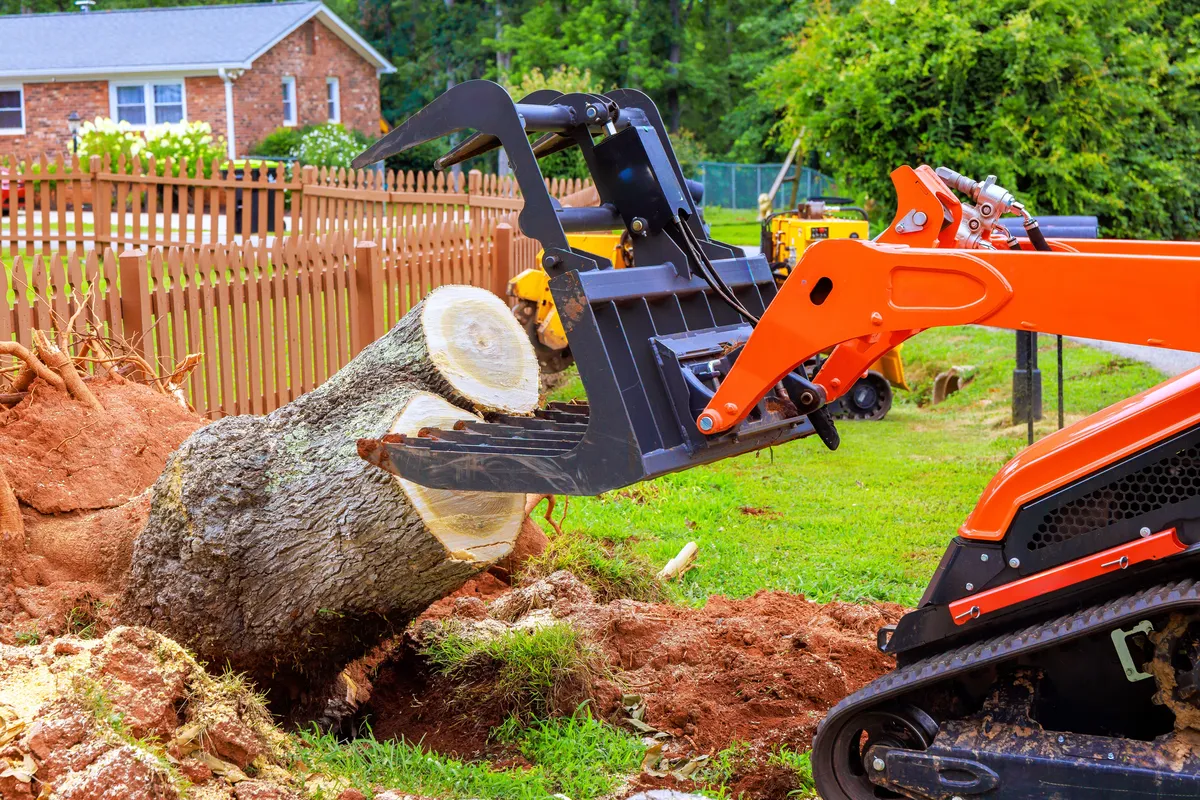
There are things buried in your yard you probably never think about — gas lines, water mains, sewer pipes, electric cables, fiber optic lines, and irrigation systems. They sit a few inches to a few feet below the surface, running from the street to your house and sometimes crisscrossing your property in ways that do not match any logical pattern.
When a tree needs to come down, those buried utilities become a real concern. The tree itself usually is not the problem — felling a tree does not disturb underground lines. But stump grinding and root removal do. A stump grinder chews through wood 12 to 18 inches below grade, right where many utility lines sit. Here is what every Charlotte homeowner should know before scheduling tree removal near buried utilities.
What Is Buried in Your Charlotte Yard
A typical Charlotte residential property has several utility lines running underground:
- Natural gas. Piedmont Natural Gas serves most of the Charlotte metro. Gas lines run from the street to your meter, usually along the side or front of the property. They are typically 12 to 24 inches deep. Hitting a gas line is the most dangerous utility strike — it can cause an explosion.
- Water. Charlotte Water supplies the city and much of Mecklenburg County. Water mains run under the street, with a service line branching to your meter. Depth varies from 12 to 36 inches.
- Sewer. Sewer lines run from your house to the main in the street, typically 2 to 6 feet deep. In older Charlotte neighborhoods like Dilworth, Plaza Midwood, and NoDa, original clay sewer lines may still be in use. These are particularly vulnerable to tree root intrusion and damage.
- Electric. If your power line comes in underground (common in newer Charlotte subdivisions), the cable runs from a transformer to your meter. Depth is usually 24 to 36 inches.
- Cable, internet, and phone. These are often the shallowest utilities, sometimes only 6 to 12 inches deep. They are the most commonly hit during tree work because they are barely below the surface.
- Irrigation systems. If you have a sprinkler system, the pipes and heads are typically 6 to 12 inches deep and may run anywhere in the yard.
NC 811: Call Before You Dig
North Carolina law requires anyone doing excavation work to call NC 811 (dial 811 or 1-800-632-4949) at least three working days before digging. This is free. The 811 service contacts all utility providers in the area, and each one sends a locator to mark their lines in your yard with color-coded paint or flags.
The color codes are standardized nationally:
- Red = electric
- Yellow = gas
- Blue = water
- Green = sewer
- Orange = cable, phone, fiber optic
- White = proposed excavation area
A good tree service company will call 811 before any job that involves stump grinding or root removal. If a company shows up without utility markings in place, that is a red flag. Ask them about it. Some companies will ask the homeowner to call 811 in advance. Either way, the lines need to be marked before grinding starts.
There are limitations to 811. The service only marks utilities up to the meter or point of connection. Private lines on your property — like an irrigation system, a gas line running to a pool heater, or electric running to a detached garage — are not covered. You need to know where those are yourself or hire a private locating service.
How Tree Roots and Utilities Interact
Tree roots do not just grow near utilities — they actively seek them out. Sewer lines are the worst. The joints in older sewer pipes (especially clay pipes found in Charlotte neighborhoods built before the 1970s) leak small amounts of moisture, and roots follow that moisture right into the pipe. Once inside, they grow into dense masses that block the line.
Water lines attract roots for the same reason. Even a tiny amount of condensation on a water pipe in dry soil can draw roots from several feet away. Gas lines and electric cables are less attractive to roots but can still end up tangled in root systems simply because the roots grow through the same zone.
This means that when a tree is near a utility, the roots and the utility are often intertwined. Removing the tree does not automatically solve the root-utility interaction, and grinding the stump without knowing where the utilities are can make things much worse.
Stump Grinding Near Utilities
Stump grinding is where the real utility risk lies. The grinder's cutting wheel spins at high speed and chews through wood, dirt, and rocks below grade. It will also chew through a gas line, water pipe, or fiber optic cable without hesitation.
Professional tree companies handle this several ways:
- Partial grinding. When utilities are close, the crew may grind the stump only to a shallow depth (4 to 6 inches below grade instead of 12 to 18 inches) on the side closest to the utility marking. This leaves more of the stump underground but avoids the utility line.
- Hand digging. Near marked utilities, some crews will hand-dig around the stump to expose the utility line before grinding. Once they can see the line, they know exactly how close they can grind.
- Air spade. An air spade uses compressed air to blow soil away from roots and utilities without damaging them. Some arborists use this tool near high-risk utilities (gas lines, fiber optic) to expose everything before any grinding starts.
- Leaving the stump. In some cases, when a major gas line or electrical cable runs directly under or through the stump, the safest option is to grind the stump above grade and leave the below-ground portion to decay naturally. It takes years, but it avoids the risk entirely.
For more on the differences between partial and full stump work, see our guide on stump grinding vs full removal.
What Happens If a Line Gets Hit
It depends on the line.
Gas line: If you smell gas or hear hissing, everyone needs to leave the area immediately. No phones, no engines, no sparks. Move at least 100 feet away and call 911 and Piedmont Natural Gas emergency line. A gas line strike is a genuine emergency. The utility company will repair the line at no cost if 811 was called and the line was properly marked. If 811 was not called, the homeowner or contractor may be liable for the repair.
Water line: Water will start gushing or pooling. Not immediately dangerous but it can flood the area quickly. Turn off the water at the meter (if you know where it is) and call Charlotte Water. Repair costs depend on who is at fault — if the line was marked and the crew hit it anyway, the tree company's insurance should cover it.
Sewer line: You may not know immediately. Sewer strikes sometimes do not show up until you have drainage problems days later. If a sewer line was marked and is near the stump, have it scoped with a camera after the work is done.
Electric cable: An underground electric strike can be fatal. Modern stump grinders have some protection against electrical contact, but this is not something to test. If an electric line is within the grinding zone, the utility company may need to de-energize it before work begins.
Cable/phone/fiber: These are the most commonly hit and the least dangerous. You lose your internet connection. The cable company comes out and repairs it, usually within a day or two. Annoying but not hazardous.
Your Responsibilities as the Homeowner
Even though the tree company does the work, you have responsibilities too:
- Call 811 if the tree company asks you to (some do, some handle it themselves — clarify this when you book the job)
- Tell the crew about any private utilities (irrigation, gas to pool heater, electric to shed or detached garage, buried dog fence)
- Point out any sewer cleanouts or utility access points you know about
- Ask the crew how they plan to handle the stump if utilities are nearby
On larger land clearing projects, utility location is even more critical because heavy equipment is involved. Excavators and bulldozers can damage utilities that a stump grinder would pass over.
Choosing the Right Company
Not every tree company treats utility lines with the same level of caution. When getting quotes for tree removal near known utility lines, ask these questions:
- Do you call 811 before stump grinding? (The answer should always be yes)
- What do you do when a utility is within the grinding zone?
- Does your insurance cover utility line damage?
- Have you handled jobs near gas or electric lines before?
A company that brushes off utility concerns is a company you do not want working in your yard. The cost of tree removal might be slightly higher with a company that takes these precautions, but it is a lot cheaper than repairing a broken gas line or dealing with a flooded yard from a severed water main.
Need a Tree Removed Near Utility Lines?
Get a free quote from experienced Charlotte tree service companies. Professionals who know how to work around underground utilities safely.
Get a Free Quote