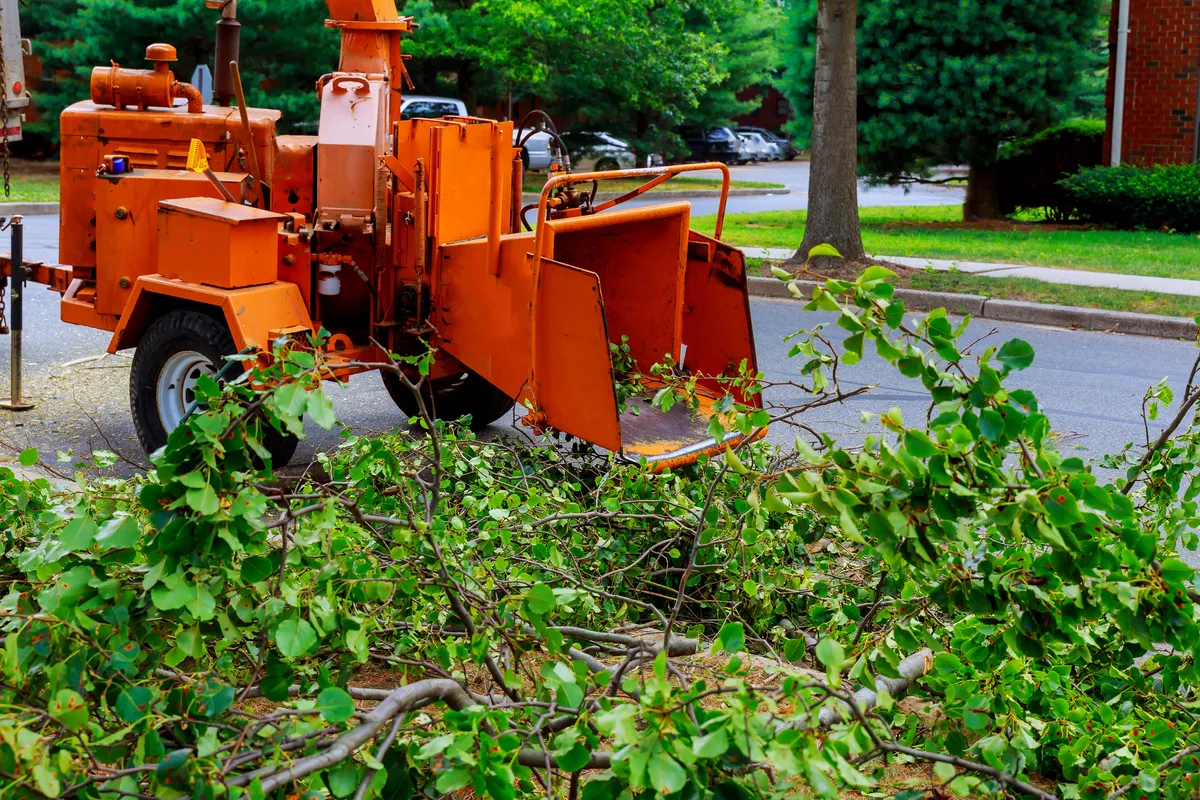
After a tree comes down in your Charlotte yard, you are usually left with a pile of wood chips. Sometimes it is a modest pile. Sometimes, if it was a big oak or pine, it is a mountain. The tree service crew will ask if you want them to haul the chips away or leave them. Most companies charge less if they can leave the chips on site, and many Charlotte homeowners say "sure, leave them" without thinking too hard about what they will actually do with all that mulch.
This guide covers what to do with those wood chips, how to use them properly around your yard, the mistakes that kill plants and trees, and your options if you end up with more mulch than you can use.
What Happens to the Wood After Tree Removal?
When a tree removal crew takes down a tree (see our Charlotte tree removal cost guide for pricing details), they typically run the branches and smaller pieces through a chipper. This produces a coarse mix of wood chips, bark, and leaves. The trunk sections are usually too large for a chipper and get hauled away as logs, cut into firewood rounds, or left for the homeowner to deal with.
If you also had the stump ground, that produces a separate pile of grindings -- a mix of wood shavings and soil. Stump grindings are different from branch chips and should be handled differently, which we will get to below.
A medium-sized tree (30 to 50 feet) typically produces anywhere from 3 to 8 cubic yards of chips. A large tree can produce 10 or more cubic yards. That is a lot of mulch. To put it in perspective, most landscape beds around a Charlotte home use about 3 to 5 cubic yards of mulch total. So one tree can easily produce more chips than your entire property needs.
Using Mulch from Your Own Tree
Free mulch is one of the perks of tree removal. Instead of paying $30 to $50 per cubic yard for bagged mulch from a garden center, you have a fresh supply right in your yard. Here is how to use it well.
Good Uses for Fresh Wood Chips
- Landscape beds. Spread chips around trees, shrubs, and perennials to suppress weeds, retain moisture, and regulate soil temperature. This is especially valuable in Charlotte's hot summers when soil can dry out fast during July and August heat spells.
- Garden paths. Fresh chips make excellent walkway material through garden areas and between beds. They compact well, drain quickly, and feel soft underfoot.
- Erosion control on slopes. Charlotte's Piedmont clay erodes easily during heavy rain. A thick layer of wood chips on a slope can slow water runoff and prevent soil loss while you wait for ground cover to establish.
- Play areas. Wood chips under swing sets and play equipment provide a soft landing surface. The International Playground Safety Standards recommend a 9 to 12 inch depth for fall protection.
- Composting. Wood chips are an excellent carbon source ("brown material") for compost piles. Mix them with grass clippings, kitchen scraps, and other nitrogen-rich "green material" for a balanced compost.
Things to Know Before Spreading
Fresh wood chips are not the same as the aged, dyed mulch you buy in bags. Here are a few differences to be aware of.
Nitrogen tie-up. As fresh wood chips decompose, the microorganisms breaking them down consume nitrogen from the surrounding soil. This can temporarily starve nearby plants of nitrogen, causing yellowing leaves and stunted growth. This is really only a problem if you mix fresh chips into the soil. If you spread them on top of the soil as mulch, the nitrogen tie-up stays at the surface and rarely affects established plant roots.
They will look rough at first. Fresh chips are a mix of colors and textures, not the uniform brown or red you get from commercial mulch. Some homeowners do not mind the natural look. Others find it messy. Within a few months, the chips will darken and settle into a more uniform appearance.
Some species work better than others. Hardwood chips (oak, maple, sweetgum) break down faster and make better mulch than pine chips, which are more acidic and decompose slowly. If you had a pine tree removed, those chips are still useful but work best around acid-loving plants like azaleas, blueberries, and hollies -- all of which grow well in the Charlotte area.
Proper Mulching Depth and Technique
Mulching seems simple, but getting it wrong can damage your remaining trees and plants. Here are the rules.
The Right Depth
- Around trees: 2 to 4 inches deep, spread in a ring from about 6 inches away from the trunk out to the drip line (the outer edge of the canopy). Keep the mulch away from the trunk itself.
- In landscape beds: 2 to 3 inches deep around shrubs and perennials. More than 4 inches starts to smother roots and trap too much moisture.
- On paths and play areas: 3 to 6 inches is fine since there are no plants to worry about.
The Volcano Mulching Warning
This is the single biggest mulching mistake, and it is everywhere in Charlotte. Drive through any neighborhood in Ballantyne, Matthews, or South End and you will see it: mulch piled up against tree trunks in tall cones, sometimes 8 to 12 inches high or more. Landscapers do it. Homeowners do it. It looks like the tree is wearing a turtleneck made of mulch.
This is called "volcano mulching," and it is terrible for trees. Here is why:
- Mulch piled against the trunk holds moisture against the bark, which causes rot and decay
- The tree may start growing roots into the mulch pile instead of into the ground, creating a weak, unstable root system
- Those roots growing in the mulch can girdle the trunk, slowly strangling the tree over years
- Insects and rodents love hiding in mulch piles against trunks, and they can damage the bark
- It traps heat and moisture that promotes fungal diseases
The root flare -- where the trunk widens at the base and transitions into the root system -- should always be visible and exposed to air. If you cannot see the root flare, there is too much mulch. Pull it back and create a donut shape, not a volcano.
How Long Fresh Mulch Takes to Decompose
In Charlotte's warm, humid climate, wood chip mulch breaks down faster than in cooler, drier regions. Here is roughly what to expect:
- Hardwood chips (oak, maple, sweetgum): 1 to 2 years to mostly decompose. They will need topping off annually to maintain a good depth.
- Softwood chips (pine, cedar): 2 to 3 years. Pine and cedar break down more slowly because of their resin content and natural resistance to decay.
- Stump grindings: 1 to 3 years, depending on the wood species and the size of the chips. Grindings are often mixed with soil, which speeds decomposition.
Charlotte's long, hot summers (90-plus degree days from June through September) and high humidity accelerate decomposition compared to what you would see in cooler climates. By the end of the second summer, most fresh chips will have darkened, shrunk, and started blending into the soil.
As the mulch breaks down, it adds organic matter to Charlotte's clay soil. Over time, this improves drainage, aeration, and nutrient content. Clay soil amended with decomposed wood chips becomes much easier to work with for planting.
Getting Free Mulch from Tree Companies
If you need more mulch than your tree produced, or if you did not keep the chips from your removal, you can often get free wood chips from tree service companies in the Charlotte area.
Here is how it works: tree crews generate massive amounts of chips every day. Hauling them to a dump or recycling facility costs the company time and money. Many companies are happy to dump a load of fresh chips at your house for free if you are anywhere near where they are working that day. Some will even deliver for a small fee if you are not on their route.
A few things to keep in mind:
- You usually cannot choose the type of wood. The load will be whatever they chipped that day -- could be oak, pine, sweetgum, or a mix of everything.
- Loads are big. A typical chipper truck holds 10 to 15 cubic yards. That is a pile roughly 10 feet wide and 4 feet tall. Make sure you have room.
- The chips will be fresh and green. They will need a few weeks to settle and lose some moisture before they look like the mulch you see at garden centers.
You can also check websites like ChipDrop, which connects tree companies looking to offload chips with homeowners who want them. Charlotte is an active area for this service.
Charlotte's Composting and Yard Waste Options
If you have more wood chips than you can use and do not want to store them, Charlotte and Mecklenburg County offer several options for yard waste disposal.
Curbside yard waste pickup. Mecklenburg County residents can set out yard waste (including wood chips) at the curb on their regular collection day. Bundle branches and bag loose material. There are limits on how much you can put out per week, so a massive pile of chips may take several weeks to get rid of this way.
Compost Central. Mecklenburg County operates Compost Central at 5150 Reedy Creek Road, where residents can drop off yard waste for free. They also sell finished compost made from collected yard waste, which is a nice full-circle option.
Give them away. Post on local Charlotte Facebook groups, Nextdoor, or Craigslist. Gardeners and landscapers are often looking for free wood chips, especially in spring and fall when mulching is top of mind. You would be surprised how fast a "free mulch" post gets responses in Charlotte neighborhoods.
Replanting in the Spot Where a Tree Was Removed
Once a tree is gone, many Charlotte homeowners want to plant something new in the same spot. This is a great impulse, but there are a few things to consider first.
Wait for the Stump to Be Dealt With
If the stump is still in the ground, you will need it ground out before you can plant in that spot. Stump grinding removes the wood down to about 6 to 12 inches below ground level and produces a pit full of grindings. You will need to remove most of those grindings and backfill with good topsoil before planting. For more on this process, see our guide to stump grinding vs. stump removal.
Soil Recovery
The spot where a large tree stood may have depleted soil. Decades of root activity, plus the nitrogen tie-up from decomposing grindings, can leave the soil in poor condition for immediate replanting. Adding compost, topsoil, and a balanced slow-release fertilizer will help. In Charlotte's clay soil, incorporating organic matter is especially important for giving a new tree a good start.
Wait Time
You do not need to wait years, but giving the spot 3 to 6 months to settle is smart. This lets the stump grindings decompose some, the backfill to settle, and the soil biology to stabilize. If you plant too soon, the decomposing wood underground can rob nitrogen from the new tree's roots.
Choosing the Right Replacement
This is your chance to pick a tree that is well suited to your yard and Charlotte's climate. Avoid planting the same species in the same spot if the original tree had disease problems -- the pathogens may still be in the soil. Consider the mature size of the replacement and its distance from your house, power lines, and driveway. Our guide to the best shade trees to plant in Charlotte can help you pick the right one.
What to Do with Stump Grindings Specifically
Stump grindings are a mix of wood fragments and soil from the grinding process. They are coarser than branch chips and decompose differently. Here are your options:
- Use them as mulch. Stump grindings work fine as mulch in landscape beds, but they are rougher looking than branch chips. Spread them 2 to 3 inches deep and keep them away from plant stems and tree trunks.
- Backfill the hole. After removing some grindings, use the rest to partially fill the stump hole, then top off with soil. As the grindings decompose underground, the area will settle. Plan to add more soil in 6 to 12 months as it sinks.
- Compost them. Stump grindings compost well when mixed with nitrogen-rich material. They take longer than leaf mulch to break down, but Charlotte's warm summers speed the process.
One thing to watch for: stump grindings from diseased trees (like oaks with bacterial leaf scorch or trees with root rot) should not be spread as mulch near other trees of the same species. While the heat of composting usually kills pathogens, spreading raw grindings could spread the problem. When in doubt, haul them to Mecklenburg County's Compost Central and let the commercial composting process handle it.
Free Mulch Is Free Mulch
The wood chips left after tree removal in Charlotte are not trash. They are a free resource that can improve your soil, suppress weeds, and protect your plants from Charlotte's summer heat. Just use them correctly: keep mulch 2 to 4 inches deep, never pile it against tree trunks, and give the removal spot time to recover before replanting.
If you are planning a tree removal and wondering what to do with the aftermath, ask your tree service company about your options. Some companies offer mulch delivery as a side service, and most will leave the chips at no extra charge if you want them.
Need a Tree Removed in Charlotte?
Get free quotes from local tree service companies. They will handle the removal, stump grinding, and cleanup so you can focus on what to do next with your yard.
Get a Free Quote