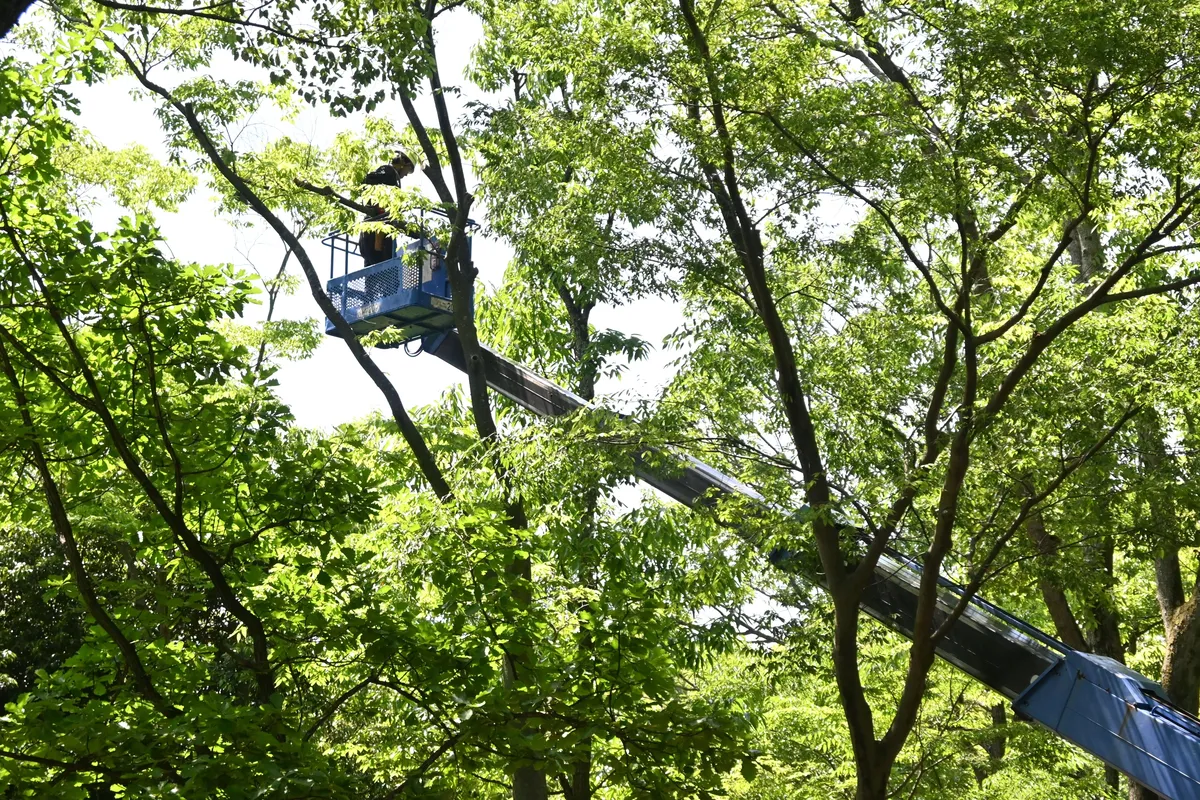
You just had a dead or dying tree removed from your Charlotte yard, and now there is a hole in the canopy. The shade is gone, the yard feels empty, and you are already noticing how much hotter it gets without that tree blocking the afternoon sun. The natural next step is planting a replacement, and the tree you pick now will be part of your property for decades.
Charlotte sits in USDA Hardiness Zone 7b/8a, right in the Piedmont region of North Carolina. That means hot, humid summers, mild winters with occasional hard freezes, and about 43 inches of rain per year. You need a shade tree that can handle all of it -- summer heat, clay soil, drought stress between storms, and the occasional ice event in January or February.
Here are the best shade trees for Charlotte yards, with honest notes on growth rates, mature sizes, and the trade-offs for each one.
Willow Oak
If you have ever walked or driven through Myers Park, Dilworth, or Eastover, you have been under willow oaks. They line the streets of Charlotte's oldest and most established neighborhoods, and for good reason. The willow oak is arguably the best all-around shade tree for the Charlotte area.
- Mature size: 60 to 75 feet tall, 40 to 60 foot spread
- Growth rate: Fast for an oak -- about 2 to 3 feet per year in good conditions
- Fall color: Yellow to russet brown
- Lifespan: 80 to 100+ years
Why it works in Charlotte: Willow oaks are native to the Piedmont, tolerate Charlotte's clay soil well, and handle both wet and moderately dry conditions. They grow fast enough that you will have real shade within 8 to 10 years of planting. Their narrow, willow-like leaves are easier to clean up than the big, broad leaves of white or red oaks.
The trade-off: Willow oaks produce a heavy acorn crop, especially every few years during "mast years." They also get large, so you need room. Do not plant one within 20 feet of your house or driveway. For more on caring for oaks in the Charlotte area, see our oak tree care guide.
Red Maple (October Glory and Autumn Blaze Varieties)
Red maples are hugely popular as shade trees across the Charlotte metro, and the named varieties offer predictable fall color that native seedlings sometimes lack.
- Mature size: 40 to 60 feet tall, 30 to 50 foot spread
- Growth rate: Moderate to fast -- 1.5 to 2.5 feet per year
- Fall color: Brilliant red to orange-red (October Glory is especially vibrant)
- Lifespan: 60 to 80 years
Why it works in Charlotte: Red maples are native to the area and adapt well to Charlotte's climate. They tolerate both wet and average soils, though they prefer slightly acidic conditions, which Charlotte's soil naturally provides. The fall color in Charlotte is stunning, usually peaking in late October to mid-November. October Glory is the go-to variety for reliable red fall color. Autumn Blaze (a red maple/silver maple hybrid) grows faster but has slightly weaker wood.
The trade-off: Red maples have somewhat shallow root systems that can lift sidewalks and driveways over time. Do not plant closer than 15 feet from paved surfaces. They are also susceptible to some leaf diseases in Charlotte's humid summers, though these are mostly cosmetic.
Tulip Poplar
The tulip poplar (also called tulip tree or yellow poplar) is North Carolina's tallest native hardwood. You will find them throughout the Charlotte area, especially in larger lots in Weddington, Marvin, and the Lake Norman corridor.
- Mature size: 70 to 90 feet tall, 35 to 50 foot spread
- Growth rate: Very fast -- 3 to 5 feet per year when young
- Fall color: Golden yellow
- Lifespan: 150 to 200+ years
Why it works in Charlotte: If you want shade fast, the tulip poplar delivers. It is one of the fastest-growing hardwoods in the Southeast, and it produces a tall, straight trunk with a high canopy that lets you walk and mow underneath. The tulip-shaped flowers in spring are unique and attractive.
The trade-off: Tulip poplars get very large and are not suitable for small lots. They can be brittle in Charlotte storms, especially older specimens. They also attract aphids, which produce a sticky honeydew that coats anything parked beneath the canopy. If your driveway or deck is under the tree, you will notice. Plant them where they have room to grow and where the mess will not bother you.
Southern Magnolia
The Southern magnolia is an iconic tree in the Carolinas. Its large, glossy evergreen leaves and fragrant white flowers are instantly recognizable in neighborhoods throughout Charlotte.
- Mature size: 60 to 80 feet tall, 30 to 50 foot spread
- Growth rate: Moderate -- 1 to 2 feet per year
- Fall color: Evergreen -- no fall leaf drop (though it does drop old leaves in spring)
- Lifespan: 80 to 120+ years
Why it works in Charlotte: Magnolias provide year-round shade since they keep their leaves through winter. They are drought-tolerant once established, handle Charlotte's heat and humidity well, and are reasonably wind-resistant. The flowers are beautiful, blooming from late May through June in the Charlotte area.
The trade-off: Magnolias are messy. They drop large, leathery leaves year-round (especially in spring), seed pods in fall, and flower petals in summer. The fallen leaves are tough and do not decompose quickly, so they pile up. The dense canopy also means nothing grows underneath a mature magnolia -- no grass, no ground cover, nothing. If you want shade and do not mind the cleanup, it is a great choice. Just do not plant one in the middle of a lawn you want to keep green.
Chinese Pistache
This is an underused gem that deserves more attention in Charlotte. The Chinese pistache is a medium-sized shade tree with some of the best fall color of any tree you can plant in the Piedmont.
- Mature size: 30 to 45 feet tall, 25 to 35 foot spread
- Growth rate: Moderate -- 1.5 to 2 feet per year
- Fall color: Brilliant orange-red to scarlet
- Lifespan: 50 to 100 years
Why it works in Charlotte: Chinese pistache handles heat, drought, and poor soil better than most shade trees. It thrives in Charlotte's clay without complaint. It has no serious pest or disease problems in this area. The medium size makes it a good fit for smaller lots or closer to houses where a 70-foot oak would be too much tree. And the fall color is spectacular -- vivid reds and oranges that rival any maple.
The trade-off: Chinese pistache grows slower than some other options on this list, so you will wait longer for full shade. Female trees produce small berries that can be messy on driveways and sidewalks. Ask your nursery for a male tree if mess is a concern. Availability can be limited at Charlotte garden centers, so you may need to order one or check a few places before you find one.
Bald Cypress
The bald cypress is a deciduous conifer that is native to the Southeast and thrives in Charlotte's climate. You will see them along waterways and in parks throughout the area.
- Mature size: 50 to 70 feet tall, 20 to 30 foot spread
- Growth rate: Moderate to fast -- 1.5 to 2 feet per year
- Fall color: Copper-orange to russet brown before dropping needles
- Lifespan: 600+ years (one of the longest-lived trees in North America)
Why it works in Charlotte: Despite its swamp associations, bald cypress grows perfectly well in average yard conditions. It tolerates both wet and dry soils, handles Charlotte's clay, and is extremely wind-resistant with a strong central trunk. It has virtually no pest or disease problems. The feathery, fine-textured foliage provides dappled shade that still lets some light through to your lawn.
The trade-off: The pyramidal shape provides less dense shade than a broad-canopied oak or maple. It drops needles in fall that can clog gutters. In wet areas, it may develop "knees" (root projections that stick up above the soil), which can make mowing around it difficult. In a typical Charlotte yard, knees are rare but possible in low spots.
River Birch
River birch is native to North Carolina and is well adapted to the Charlotte area. It is a popular choice for homeowners who want a multi-trunk shade tree with interesting bark.
- Mature size: 40 to 60 feet tall, 25 to 40 foot spread
- Growth rate: Fast -- 2 to 3 feet per year
- Fall color: Yellow
- Lifespan: 50 to 75 years
Why it works in Charlotte: River birch grows fast, handles wet or clay soil, and tolerates the heat better than any other birch species. The peeling, cinnamon-colored bark adds visual interest year-round, especially in winter. Multi-stem forms provide a wide canopy that fills in quickly. Heritage is the most popular variety and is widely available at Charlotte nurseries.
The trade-off: River birches are messy. They drop catkins in spring, leaves in fall, and shed bark throughout the year. They have high water needs during Charlotte's hot summers and may stress during drought. They are also shorter-lived than oaks or maples, so think of them as a 50-year tree rather than a century tree.
Where to Buy Trees in Charlotte
Skip the big box stores for shade trees. The quality at Home Depot and Lowe's is hit-or-miss, and the staff usually cannot answer detailed questions about species performance in Charlotte's specific conditions. Instead, try these local options:
- Pike Nurseries -- locations in South Charlotte and Huntersville. Good selection of shade trees in larger container sizes.
- Wilson's Natural Landscaping -- off Brookshire Freeway, specializes in native plants and trees for the Carolina Piedmont.
- Blackhawk Hardware & Garden Center -- in the Elizabeth neighborhood. Smaller selection but knowledgeable staff.
- Big Bloomers Flower Farm -- in Sanford (about an hour from Charlotte). Worth the drive if you want a wide selection of native and adapted trees.
- NC State Extension Master Gardener plant sales -- held seasonally in Mecklenburg County. Great prices on locally grown plants and trees.
When buying a shade tree, look for one with a strong central leader (one main trunk), well-spaced branches, and a healthy root system that is not circling inside the container. A tree with girdling roots will struggle to establish and may develop structural problems years later.
Planting Tips for Charlotte's Clay Soil
Charlotte's Piedmont clay is the number one challenge for new tree planting. It drains poorly, compacts easily, and can suffocate roots if you are not careful. Here is how to give your new shade tree the best start.
- Dig wide, not deep. The planting hole should be 2 to 3 times wider than the root ball but only as deep as the root ball itself. The root flare (where the trunk widens at the base) should be at or slightly above ground level. Planting too deep is the most common mistake in Charlotte clay and it kills trees.
- Do not amend the backfill. Old advice said to mix compost into the planting hole. Current research says to backfill with the same clay you dug out. If you create a pocket of rich soil in clay, roots circle inside the good stuff and never grow out into the surrounding ground. The tree becomes root-bound in its own planting hole.
- Mulch the surface. Spread 3 to 4 inches of mulch in a wide ring around the tree, starting 6 inches from the trunk and extending out to the drip line. This mimics the forest floor, moderates soil temperature, and retains moisture. Do not create a mulch volcano. See our guide on mulching after tree removal for details.
- Water deeply for the first two years. New trees in Charlotte clay need about 1 inch of water per week during the growing season. Deep, infrequent watering is better than frequent shallow sprinkles. A slow-drip hose left at the base for 30 to 60 minutes once or twice a week works well.
- Stake only if necessary. Most trees do not need staking. If the tree stands upright on its own, leave it alone. Staking can actually prevent the trunk from developing the strength it needs. Only stake if the tree is top-heavy and falls over in wind, and remove the stakes after one growing season.
When to Plant: Fall Is Best in Charlotte
The best time to plant shade trees in the Charlotte area is mid-October through November. Here is why:
- The soil is still warm enough for root growth, even though the air is cooling down
- The tree has the entire winter and spring to establish roots before it faces the stress of a Charlotte summer
- Rainfall is typically more consistent in fall and winter, reducing the need for supplemental watering
- The tree is entering dormancy, so transplant shock is minimal
Spring planting (March through April) is the second-best option. Avoid planting in the heat of summer (June through August) if at all possible. A tree planted in July has to establish roots while dealing with 90-degree heat, high humidity, and the unpredictable rainfall that Charlotte gets in summer. It is a rough start.
Avoiding the Same Mistakes
If the tree you removed died from disease, was the wrong species for the spot, or was planted too close to your house, take a moment to learn from what went wrong before you plant the replacement.
- Right tree, right place. Match the tree's mature size to the available space. A willow oak that grows 70 feet tall does not belong 10 feet from your house. Check overhead for power lines and underground for utilities before you dig.
- Avoid monoculture. If every yard on your street has the same tree species, one disease or pest could take them all out. Diversity is your insurance policy. If your old tree was a willow oak, consider a red maple or bald cypress instead.
- Skip the Bradford pear. They grow fast and look nice for a few years, then split apart in storms. Charlotte is full of wrecked Bradford pears after every storm. They are also invasive -- the fruit spreads and Bradford pear seedlings are choking out native species in forests across the Piedmont. Plant something better.
- Do not plant too close to the old stump location. If the stump was ground, the decomposing wood underground will rob nitrogen from a new tree's roots. Plant the replacement at least 3 to 5 feet away from the old stump site, or wait 6 to 12 months for the grindings to decompose.
The tree you plant today will outlive your mortgage and maybe your ownership of the house. Take the time to pick the right species, plant it correctly, and water it through its first couple of summers. Twenty years from now, you will be sitting in the shade of a tree that was worth every bit of thought you put into it.
Need a Tree Removed Before You Can Replant?
Get free quotes from local Charlotte tree service companies for removal and stump grinding. Clear the old tree and make room for the new one.
Get a Free Quote