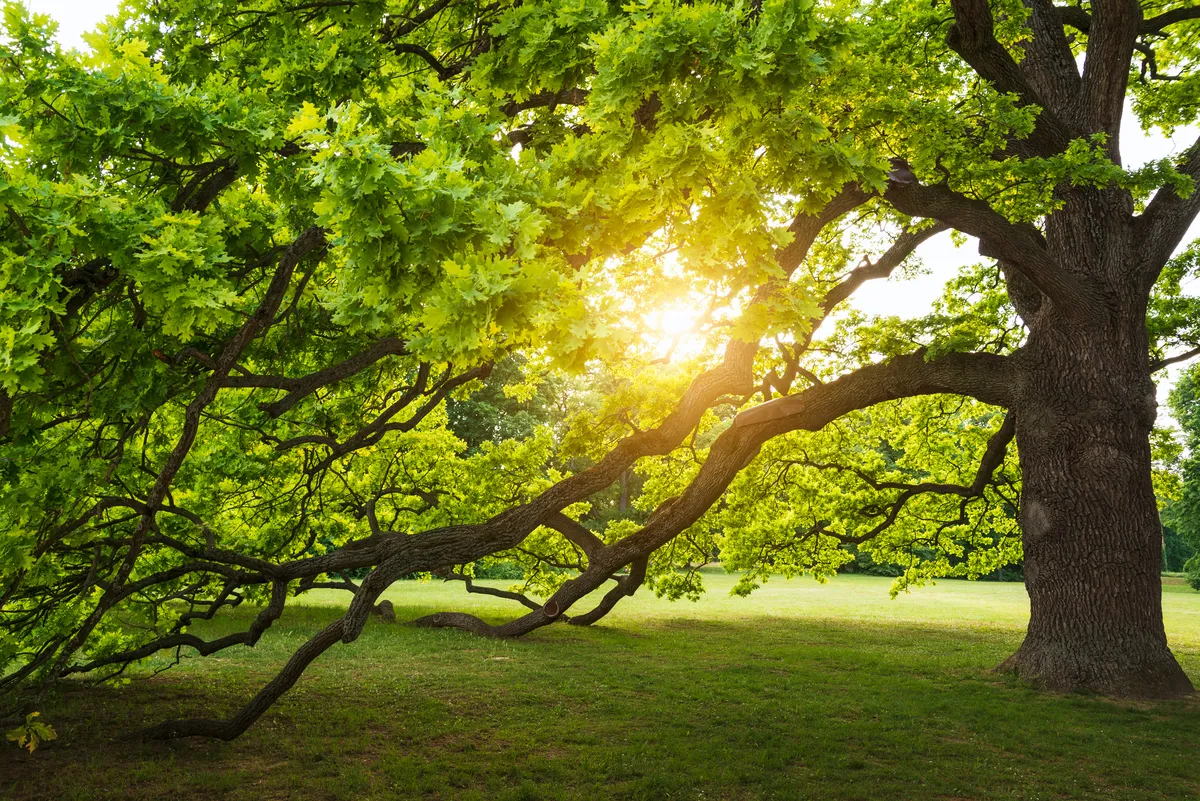
Drive through almost any neighborhood in Charlotte and you will see oaks. They line the streets of Dilworth and Myers Park. They shade backyards in Ballantyne and Weddington. They tower over homes in Eastover and SouthPark. Oaks are the backbone of Charlotte's tree canopy, and for good reason: they grow big, live long, and handle the Piedmont climate well.
But oaks are not bulletproof. They get sick. They get old. Charlotte's heat, humidity, and clay soil create specific problems that oak owners need to watch for. This guide covers the types of oaks you will find in the Charlotte area, the diseases and pests that affect them, when and how to prune them, and how to know when an oak needs to come down.
Types of Oaks in Charlotte
Not all oaks are the same. Charlotte has several species, and they each have their own strengths, weaknesses, and lifespans. Here are the ones you are most likely to have in your yard.
Willow Oak (Quercus phellos)
If you live in Charlotte, this is probably the oak you are thinking of. Willow oaks were planted aggressively as street trees and yard trees from the 1950s through the 1990s. They grow fast for an oak, have a clean shape, and their small, narrow leaves do not clog gutters as badly as other oak species. You will find them on nearly every street in older Charlotte neighborhoods like Plaza Midwood, Elizabeth, and Chantilly.
The catch: willow oaks have a shorter lifespan than other oaks. While a white oak can live 300-plus years, a willow oak typically lives 80-120 years. Many of the willow oaks planted during Charlotte's mid-century growth boom are now reaching the end of their useful life. They are big, and when they start to decline, they become expensive to remove. If you have a willow oak that is 70 or 80 years old and showing signs of decline, it is worth getting an arborist evaluation sooner rather than later.
Red Oak (Quercus rubra)
Red oaks are common in Charlotte's more wooded areas and in neighborhoods that were carved out of existing forest, like many developments in south Mecklenburg County and Indian Trail. They grow a bit slower than willow oaks but are sturdier and longer-lived, typically surviving 200 years or more in good conditions.
Red oaks are known for their brilliant fall color, turning deep red to maroon in October and November. They produce large acorns that squirrels (and your lawnmower) love. Their wood is strong and wind-resistant, making them one of the better oaks for storm survival.
White Oak (Quercus alba)
The white oak is the king of Carolina hardwoods. Slower growing than the other species, but incredibly long-lived and strong. Mature white oaks can have trunk diameters over 4 feet and canopy spreads of 80 feet or more. They are common in older, more established properties and in wooded lots throughout the Charlotte region.
White oaks are also the most resistant to disease among the oaks found here. Their wood is denser and less porous than red oak wood, which makes them harder for fungi and bacteria to invade. If you have a healthy white oak on your property, protect it. It adds significant value to your home and is very difficult to replace.
Pin Oak (Quercus palustris)
Pin oaks show up in wetter areas and are sometimes planted as landscape trees because of their distinctive pyramidal shape when young. They are common in low-lying neighborhoods near Charlotte's many creeks and in areas with poorly drained clay soil. Pin oaks are susceptible to iron chlorosis (yellowing leaves due to alkaline soil), which can be a problem in parts of Charlotte where the clay soil is more alkaline than the slightly acidic conditions pin oaks prefer.
Common Oak Diseases in Charlotte
Charlotte's climate, with its hot, humid summers and mild winters, creates favorable conditions for several diseases that target oaks. Here are the ones to watch for.
Bacterial Leaf Scorch (BLS)
This is the biggest threat to Charlotte's oaks right now. Bacterial leaf scorch is caused by the bacterium Xylella fastidiosa, which clogs the water-conducting vessels in the tree. Symptoms show up in mid to late summer, right when Charlotte's heat is at its worst: leaf margins turn brown and crispy, starting at the tips and working inward. The browning is typically separated from the green tissue by a yellow or reddish band.
BLS is spread by leafhoppers and other sap-feeding insects, and it is chronic. Once a tree has it, the tree has it for life. The disease progresses slowly over 5-10 years, killing more and more of the canopy each summer until the tree is essentially dead. There is no cure. Antibiotic injections (oxytetracycline) can slow the symptoms for a season, but they do not eliminate the bacteria.
Red oaks and pin oaks are the most susceptible. Willow oaks also get it frequently. If you see the telltale leaf scorch pattern on your oak in July or August, have an arborist test for BLS. If the test comes back positive, you will need to start planning for eventual tree removal, which may be 3-5 years away or sooner depending on how far the disease has advanced.
Oak Wilt
Oak wilt is caused by the fungus Ceratocystis fagacearum and can kill a tree in a single season. It is less common in Charlotte than in some parts of the country, but it does occur in North Carolina. Red oaks are most vulnerable and can die within weeks of infection. White oaks are more resistant and can sometimes compartmentalize the fungus and survive.
The fungus spreads through root grafts between nearby oaks and through sap-feeding beetles that carry spores from infected trees to fresh wounds on healthy ones. This is one of the main reasons arborists recommend against pruning oaks in spring and early summer, when the beetles are most active and the fungus is producing spores.
Symptoms include rapid wilting and browning of leaves, starting in the upper canopy and progressing downward. Leaves may fall while still green. If you suspect oak wilt, call a certified arborist immediately. Time matters with this disease.
Anthracnose
Anthracnose is a group of fungal diseases that cause dark, irregular blotches on leaves, often accompanied by leaf curling and premature leaf drop. It is very common on Charlotte oaks during wet springs. When April and May bring extended rainy periods, and Charlotte averages about 3.5 to 4 inches of rain per month during those months, anthracnose fungi thrive.
The upside: anthracnose rarely kills oak trees. It looks bad, and your tree might drop a lot of leaves in May or June, but it will typically push out a new set of leaves by mid-summer. Healthy, well-maintained trees handle it without any treatment. Severely stressed or weakened trees may benefit from fungicide applications, but that is an arborist decision, not a homeowner one.
Hypoxylon Canker
Hypoxylon is a fungus that forms dark, crusty patches on the bark of stressed oaks. You will see it most often on trees that are already in decline from drought, construction damage, or other stress. It is not the cause of the problem; it is a sign that the tree's immune system has already failed. By the time you see hypoxylon on a trunk, the tree is usually past saving.
Charlotte's periodic summer droughts, where rainfall can drop sharply in July and August while temperatures stay above 90 for weeks, stress oaks and make them vulnerable to hypoxylon. Watering your oaks during extended dry spells, especially young trees and recently transplanted ones, can help prevent this.
When and How to Prune Oak Trees
Proper pruning keeps oaks healthy and reduces the risk of storm damage. But timing matters more with oaks than with most other trees.
Best time to prune oaks in Charlotte: Late fall through winter (November through February). The trees are dormant, the sap-feeding insects that spread oak wilt are inactive, and the risk of disease transmission is lowest.
Worst time to prune oaks in Charlotte: April through June. This is when oak wilt beetles are most active and when fresh pruning wounds are most likely to attract them. Avoid pruning during this window unless you are removing a dead or immediately hazardous branch.
What to prune:
- Dead branches: Remove these anytime, regardless of season. Dead wood does not attract beetles because there is no fresh wound response.
- Crossing or rubbing branches: These create wounds where bark wears away, inviting disease and decay.
- Low-hanging branches: Raising the canopy to allow clearance over driveways, walkways, and rooflines is probably the most frequent pruning request.
- Co-dominant stems: Where two main stems form a tight V-shape with included bark, one should be reduced or removed to prevent a catastrophic split during a storm.
Never "top" an oak tree. Topping (cutting main branches back to stubs) destroys the tree's natural form, causes a flush of weak regrowth, and creates dozens of decay entry points. A topped oak is an ugly oak, and it is far more likely to fail in a storm than a properly pruned one.
Root System Issues
Oak roots can be both a blessing and a headache. Oaks develop extensive root systems that anchor them against wind but can also cause problems as they grow. In Charlotte's compact clay soil, oak roots tend to stay closer to the surface than in sandy or loamy soils. Surface roots that buckle sidewalks, crack driveways, and push against foundations are a common complaint from homeowners in older Charlotte neighborhoods.
Options for dealing with oak root problems:
- Root pruning: Cutting specific roots on one side of the tree to stop encroachment. This must be done carefully. Cutting too many roots or cutting them too close to the trunk can destabilize the tree or kill it. Have an arborist supervise any root pruning work.
- Root barriers: Installing a physical or chemical barrier in the ground to redirect root growth away from a structure.
- Raising hardscape: Sometimes it is easier to adjust the sidewalk or driveway around the roots than to cut the roots.
- Removal: If the root damage is severe and ongoing, removal may be the practical choice, especially if the tree is also showing signs of decline. After removal, stump grinding takes care of the remaining root crown.
When an Oak Needs to Come Down
Removing a large oak is a big deal, both emotionally and financially. A healthy, mature oak can be worth $5,000 to $20,000 in appraised value. But keeping a dying or dangerous oak is not worth the risk to your home and family.
Signs that your oak is beyond saving:
- More than 50% of the canopy is dead
- The trunk has large cavities or visible decay
- Mushrooms or fungal conks are growing at the base or on the trunk
- The tree has a confirmed diagnosis of bacterial leaf scorch or oak wilt with advanced symptoms
- The root system is compromised (lifted roots, significant root rot, or major root cuts from construction)
- The tree is leaning at a new angle after a storm
If you are on the fence, get a professional assessment. A certified arborist can tell you whether treatment is worthwhile or whether it is time to take the tree down. The assessment typically costs $150-$300, and it can save you from spending thousands on futile treatments or from the much higher cost of an emergency removal after a failure.
Taking Care of Charlotte's Oaks
Oaks are tough trees, but they are not maintenance-free. Charlotte's combination of heat, humidity, clay soil, and severe storms creates challenges that oaks in other parts of the country do not face. Regular pruning during the dormant season, watching for disease symptoms during summer, keeping roots healthy, and addressing problems early will keep your oaks standing strong for decades.
If you have questions about a specific oak on your property, whether it looks sick, has root problems, or just needs pruning, get a professional opinion. An experienced tree service company that knows Charlotte's trees and climate can tell you exactly what you are dealing with and what your options are.
Worried About an Oak Tree?
Get a free quote from Charlotte tree service companies who specialize in oak tree care, pruning, and removal.
Get a Free Quote