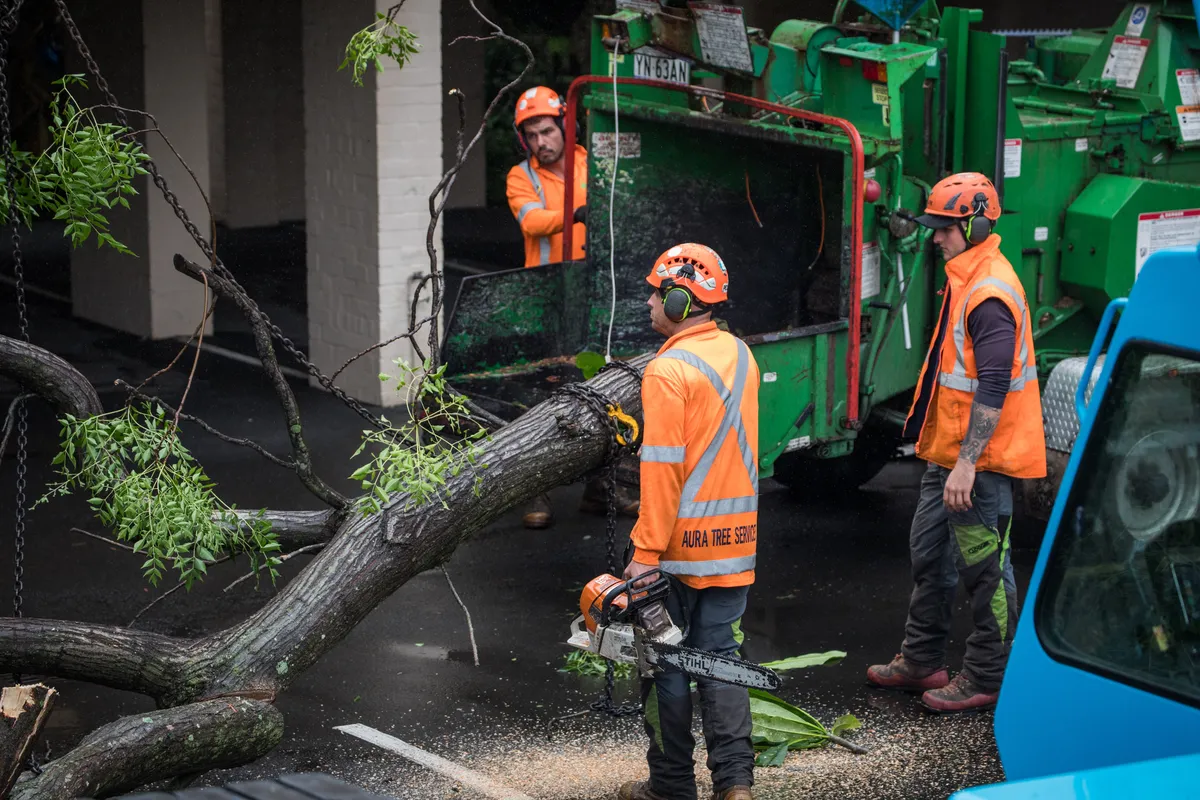
Tree work is not cheap. A single tree removal in Charlotte can run anywhere from $500 to $5,000 or more depending on the size and location. Trimming a few large oaks costs several hundred dollars at minimum. When the estimate comes in higher than expected, it is tempting to shop for the cheapest option or put the work off entirely.
Both of those reactions can cost you more in the long run. Hiring a cut-rate crew often leads to bad cuts, property damage, and trees that need to be fixed or removed a few years later. And delaying necessary work gives problems time to get worse and more expensive.
There are real ways to reduce the cost of tree work without sacrificing quality. Here is how Charlotte homeowners do it.
Schedule in the Off-Season
The busiest time for tree service companies in Charlotte is spring through early fall. That is when most homeowners think about their trees, and it is also when storm damage spikes demand. During peak season, companies are booked weeks out and have little reason to negotiate on price.
Winter — December through February — is the slow season. Crews have gaps in their schedules. Equipment is available. Many companies offer winter discounts of 10 to 20 percent just to keep their crews working. The trees are dormant, which actually makes many jobs easier. Without leaves, the canopy is lighter, sight lines are clearer, and there is less debris to clean up.
Pruning in winter is also better for many tree species. Dormant pruning reduces the risk of disease transmission and gives the tree time to seal wounds before the growing season. So you are not just saving money — you are getting the work done at the best time for the tree.
If you have non-urgent tree work — trimming, a removal that is not an emergency, stump grinding — scheduling it for January or February is one of the easiest ways to save money.
Bundle Multiple Trees Into One Job
A big chunk of the cost of tree work is mobilization. The company has to load equipment, drive to your property, set up, and then reverse the process when the job is done. That overhead is roughly the same whether they are working on one tree or four.
If you have several trees that need trimming or a removal and a stump grinding on the same property, get a quote for everything at once. Most companies will give you a better per-tree rate when the work is combined into a single visit. The savings can be significant — 15 to 25 percent compared to booking each tree as a separate job.
Talk to your neighbors, too. If the house next door also needs tree work, some companies will offer a neighborhood discount since they are already on your street with their equipment. It does not always work, but it is worth asking.
Get at Least Three Quotes
This is the most common advice for a reason: prices for the same job can vary dramatically. On a standard tree removal in Charlotte, it is not unusual to get quotes of $1,200, $1,800, and $2,500 from three different companies. The most expensive is not necessarily the best, and the cheapest is not necessarily a scam. But you need at least three data points to understand what the job should cost.
When comparing quotes, look at what is included. Does the price cover stump grinding or is that extra? Will they haul away all the wood and debris, or will they leave the logs for you to deal with? Are they planning to use a crane or a bucket truck, or are they climbing? These details affect cost and explain a lot of the variation between estimates.
Our guide on tree removal costs in Charlotte breaks down typical prices by tree size and type so you know what to expect before you start calling.
Know What to Look for in an Estimate
A professional estimate should be written, not verbal. It should include the company name and contact information, a description of the work to be done (which trees, what kind of work), the total price, what is included (debris removal, stump grinding, etc.), and the expected timeline.
Be cautious of estimates that are vague. "Trim the trees out back — $800" is not a professional estimate. You want specifics: which trees, what kind of cuts, how much of the canopy they plan to remove. Vague estimates lead to misunderstandings, and misunderstandings lead to arguments when the bill comes.
A legitimate company will also be willing to explain their pricing. Tree work is priced based on the size of the tree, the difficulty of access, the equipment required, and how much debris needs to be removed. If you ask why a quote is $2,000 instead of $1,000, a good company will walk you through the factors. A company that cannot explain its pricing is a company to avoid.
Red Flags That Cost You Money
The cheapest tree service is often the most expensive in the end. Here are warning signs that a company is not worth the risk, no matter how low the price.
No insurance. This is the biggest one. Tree work is dangerous. If an uninsured crew drops a branch on your roof, cuts into a power line, or gets injured on your property, you are potentially liable. Always ask for a certificate of insurance — general liability and workers' compensation — and verify it with the insurance company. Our guide on choosing a tree service company covers what to look for in detail.
Cash only, no written contract. Companies that only accept cash and will not put the scope of work in writing are not companies you want on your property. Cash-only operations are often uninsured, unlicensed, and will not stand behind their work if something goes wrong.
Door knockers after storms. After every major storm in Charlotte, trucks with out-of-state plates show up in neighborhoods offering tree work at "discount" rates. These crews are known in the industry as storm chasers. Some are legitimate traveling crews. Many are not. They do the work, take the money, and leave town. If something goes wrong — and it often does — you have no recourse. This is one of the most common tree service scams in the Charlotte area.
They recommend topping your trees. Tree topping — cutting major branches back to stubs — is one of the most damaging things you can do to a tree. It is also a clear sign that a company does not know what they are doing. Topped trees grow back weaker, more prone to breakage, and uglier. A company that suggests topping is telling you they do not understand basic tree biology. Walk away.
No arborist on staff or available for consultation. For basic trimming, you do not need a certified arborist on site. But the company should have access to one for complex situations — large removals near structures, trees with decay, pest or disease diagnosis. A company that has never heard of an ISA certification is not a company you want making decisions about your trees.
What You Can Do Yourself
Not all tree work requires a professional. Small jobs that you can handle safely will save you the cost of hiring out.
Pruning small branches. If you can reach it from the ground with a pole pruner (branches up to about 12 to 15 feet high and under 3 inches in diameter), you can prune it yourself. Use proper three-cut technique for larger branches to avoid tearing bark: an undercut first, then the top cut a few inches further out, then a final cut at the branch collar.
Removing small dead trees. A dead tree under 15 feet tall with a trunk under 6 inches in diameter is a reasonable DIY project if it is not near power lines or structures. A handsaw or small chainsaw handles it. Anything bigger, taller, or near a target, call a pro.
Clearing brush and small growth. If your main need is clearing understory brush, small saplings, and dead shrubs, this is yard work, not tree work. Save the professional crew for the big stuff.
Stump removal on small stumps. Stumps under 8 inches in diameter can sometimes be removed with a mattock, digging bar, and a lot of sweat. Larger stumps or stumps from species with aggressive root systems (like sweetgum or willow oak) are worth paying a company to grind out.
When Cheap Becomes Expensive
Here is the trap many Charlotte homeowners fall into: they hire the cheapest company, the work is done poorly, and then they pay a second company to fix the damage.
Bad pruning cuts — flush cuts, heading cuts, topping — leave wounds that do not heal properly. They invite decay, pests, and disease into the tree. A tree that was "trimmed" by a hack crew often develops weak, fast-growing water sprouts that are more dangerous than the original branches. Within a few years, the tree looks worse than before and needs professional corrective pruning, which costs more than doing it right the first time would have.
A botched removal can damage fences, roofs, driveways, and utility lines. If the crew was uninsured, you are paying for those repairs out of pocket.
The bottom line: the goal is not to pay as little as possible. The goal is to pay a fair price for work done correctly by an insured, knowledgeable crew. Saving $300 on a tree removal means nothing if the crew drops a limb on your car.
Payment Structure: Protect Yourself
Never pay 100 percent upfront. This is standard across the industry and any reputable company knows it. A reasonable deposit for a large job (over $2,000) is 10 to 30 percent. The balance is due upon completion. For smaller jobs, many companies do not require any deposit at all — you pay when the work is done.
A company that demands full payment before starting work is either desperate for cash (a bad sign) or planning to take your money and disappear (a worse sign). If they insist on full payment upfront, find someone else.
Get the payment terms in writing as part of the contract. This protects both sides and prevents arguments later.
Putting It All Together
The formula for saving money on tree work in Charlotte is not complicated. Schedule non-urgent work in winter. Bundle multiple trees into one job. Get at least three written quotes and compare them carefully. Avoid the red flags — no insurance, cash only, storm chasers, tree toppers. Do the small stuff yourself. And never pay in full before the work starts.
Most importantly, hire based on value, not price. A fair price from a company that does the work right, carries insurance, and cleans up after themselves is always a better deal than a cheap price from a company that cuts corners.
Looking for Honest Tree Work Pricing?
Get free quotes from vetted Charlotte tree service companies. Compare prices, check insurance, and hire with confidence.
Get a Free Quote