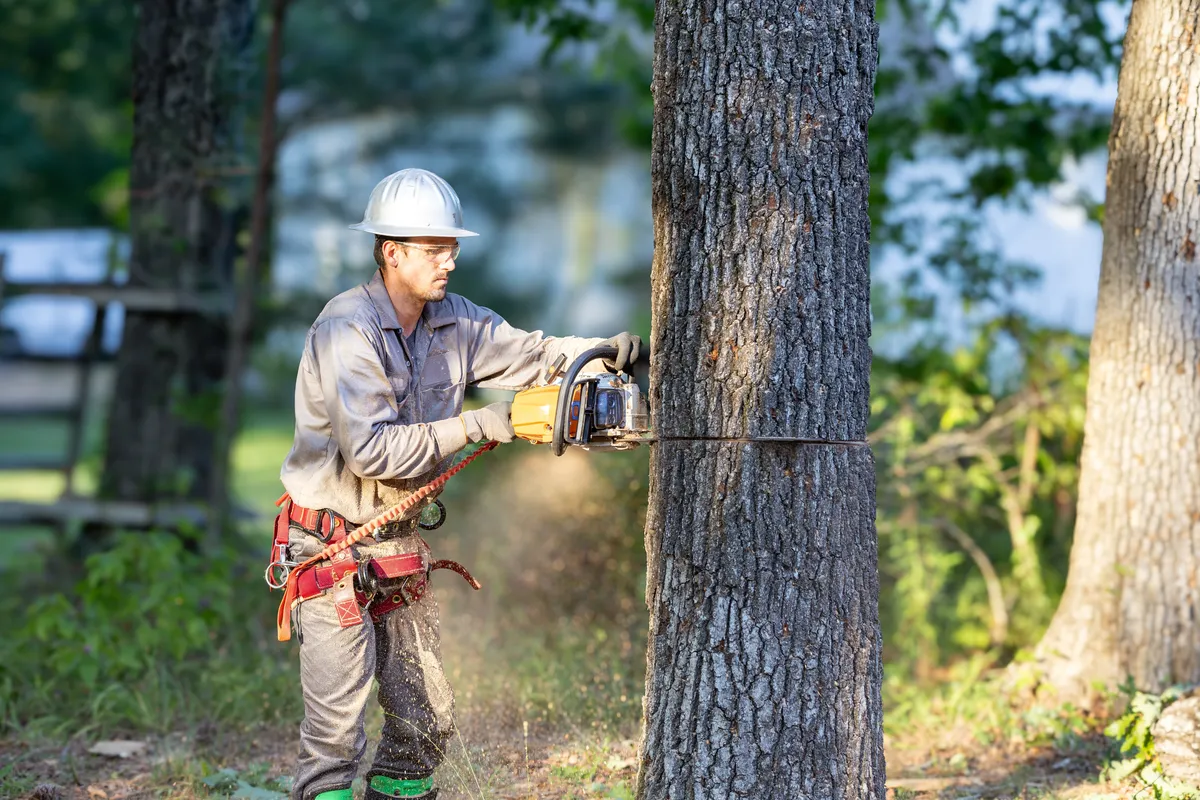
The willow oak in your front yard was 15 feet tall when you moved in. Now it is 60 feet tall, its canopy covers half the house, the roots have cracked the driveway, branches scrape the roof during every storm, and your gutters fill with leaves faster than you can clean them. You love the shade. You hate everything else about it.
This is one of the most common tree problems in Charlotte's older neighborhoods. Trees that were planted 20, 30, or 40 years ago have reached their mature size, and many of them have outgrown the space they were given. The tree is not doing anything wrong — it is just being a tree. But the yard can no longer accommodate it.
Here is how to tell when a tree has gotten too big, and what you can do about it.
Signs Your Tree Has Outgrown the Space
Branches Touching the House or Roof
When tree branches contact your home, you have a problem on multiple levels. Branches rubbing against siding wear through paint and wood. Branches resting on or hanging over the roof trap moisture, promote algae growth, and provide a highway for squirrels and raccoons to get into your attic. During storms, those branches become battering rams against your roof and windows.
The general rule: keep branches at least 10 feet from the house. If your tree's canopy is so large that pruning back to 10 feet would require removing half the tree, the tree is too big for the space.
Roots Damaging Structures
Tree roots in Charlotte's clay soil tend to stay near the surface rather than growing deep. When a large tree is close to a driveway, sidewalk, patio, or foundation, those surface roots push up concrete, crack asphalt, and put pressure on foundation walls. You will see raised sections of sidewalk, cracked driveway slabs, or uneven pavers. For a deeper look at this issue, see our guide on tree roots and foundation damage.
Root damage is progressive — it gets worse every year as the roots grow thicker. Cutting the roots may temporarily relieve pressure on the concrete, but it can destabilize the tree and the roots will grow back.
The Canopy Dominates the Entire Yard
A healthy mature tree can have a canopy spread of 40 to 80 feet, depending on the species. On a standard Charlotte suburban lot (50 to 80 feet wide), a single large tree can shade the entire property. If you cannot grow grass, your garden beds get no sun, and your yard is perpetually dark and damp, the tree is too large for the lot.
Full shade promotes moss, mildew, and thin turf. It makes decks and walkways slippery with algae. And it can affect your neighbor's property too — a tree that shades their garden is their problem but your tree.
Branches Over Power Lines
Trees growing into power lines are a safety hazard and a maintenance headache. Duke Energy trims trees around their primary lines, but they do not shape the tree — they hack back whatever is in the way, often leaving the tree lopsided and ugly. If your tree has grown tall enough to interfere with utility lines, it has likely outgrown its location.
The Tree Leans or Has Poor Structure
Trees that grow too close to structures or other trees often develop a lean or one-sided canopy as they reach toward available light. A tree that leans significantly toward your house, your neighbor's house, or a public road is a risk during storms. The bigger the tree, the bigger the potential damage. A 60-foot willow oak falling on a house is a catastrophic event — not just broken shingles, but potentially collapsed walls and ceilings.
Pruning vs. Removal: Which One Fixes the Problem?
When Pruning Works
Pruning can buy you time and reduce risk if:
- The tree is healthy and structurally sound
- You only need to create clearance from the house, roof, or power lines
- Removing 15 to 25 percent of the canopy would solve the immediate problem without ruining the tree's shape
- The root system is not causing significant structural damage
Crown reduction — selectively shortening long branches by cutting back to a lateral branch — can reduce a tree's overall size by 10 to 15 percent while keeping it looking natural. Crown raising — removing low branches — opens up space underneath without affecting the tree's height. Crown thinning — removing select interior branches — lets more light through and reduces wind load.
A good arborist can combine these techniques to make a too-large tree more manageable. The work needs to be repeated every 3 to 5 years as the tree grows back, but it can extend the tree's useful life in the space.
When Removal Is the Better Answer
Pruning cannot fix everything. Removal is the better option when:
- The tree's root system is causing foundation, driveway, or sewer line damage that will worsen
- The tree has major structural defects — split trunk, large dead limbs, extensive decay
- More than 30 percent of the canopy would need to be removed to create adequate clearance, which would leave the tree disfigured
- The tree is the wrong species for the space and will continue to outgrow it no matter how much you prune
- The tree is near the end of its expected lifespan and declining
Topping — cutting the top off a tree to make it shorter — is never the answer. Topping produces weak regrowth that is more dangerous than the original canopy, it destroys the tree's form, and it opens the tree to disease and decay. Any tree company that suggests topping is not one you want working on your property.
The Species That Outgrow Charlotte Yards Most Often
Some trees are just too large for standard residential lots. These are the species that cause the most "too big" problems in Charlotte:
Willow oak. Charlotte's most popular shade tree also becomes Charlotte's biggest yard problem. A mature willow oak reaches 60 to 80 feet tall with a 40 to 60 foot canopy spread. On a quarter-acre lot, that is too much tree. The roots are aggressive and the tree produces enormous quantities of small leaves and acorns.
Tulip poplar. These grow fast and tall — 80 to 100 feet at maturity. They were never meant for small yards. The trunks get 3 to 4 feet in diameter and the trees drop large branches in storms.
Southern magnolia. The canopy on a standard Southern magnolia reaches 40 to 50 feet across and grows from the ground up. That cone of branches takes up an enormous footprint. On anything less than a half-acre lot, a mature magnolia dominates the entire yard.
Sweetgum. Fast-growing to 60 to 80 feet with aggressive surface roots and the added problem of thousands of spiky gumballs every year.
White oak. Beautiful and long-lived, but a mature white oak can spread to 80 feet wide. That is larger than many Charlotte lots. White oaks live 200 to 300 years, so a tree planted when the neighborhood was built is still growing.
Planning Ahead: Right Tree, Right Place
The best solution to the "too big" problem is prevention. If you are planting a new tree, consider how large it will be at maturity — not in 5 years, but in 30 years. On a standard Charlotte suburban lot:
- Small trees (under 25 feet): Japanese maple, crape myrtle, dogwood, redbud. Safe anywhere on the lot.
- Medium trees (25 to 40 feet): Red maple cultivars, sweetbay magnolia, Chinese elm. Need at least 15 feet from structures.
- Large trees (40 to 60 feet): Red oak, river birch, bald cypress. Need at least 20 to 25 feet from structures and ideally a larger lot.
- Very large trees (60+ feet): Willow oak, tulip poplar, Southern magnolia. Only appropriate on lots of a half acre or more with plenty of open space.
If a tree is already too big for your yard, do not wait for a storm to make the decision for you. Get an assessment from a certified arborist. They can tell you what the tree's realistic options are — whether pruning can keep it manageable for another 10 to 15 years or whether removal now is the safer, smarter choice.
Worried About a Tree That's Too Large?
Get a free quote from experienced Charlotte tree service companies. Whether you need pruning, removal, or a professional assessment, get matched with licensed, insured professionals.
Get a Free Quote