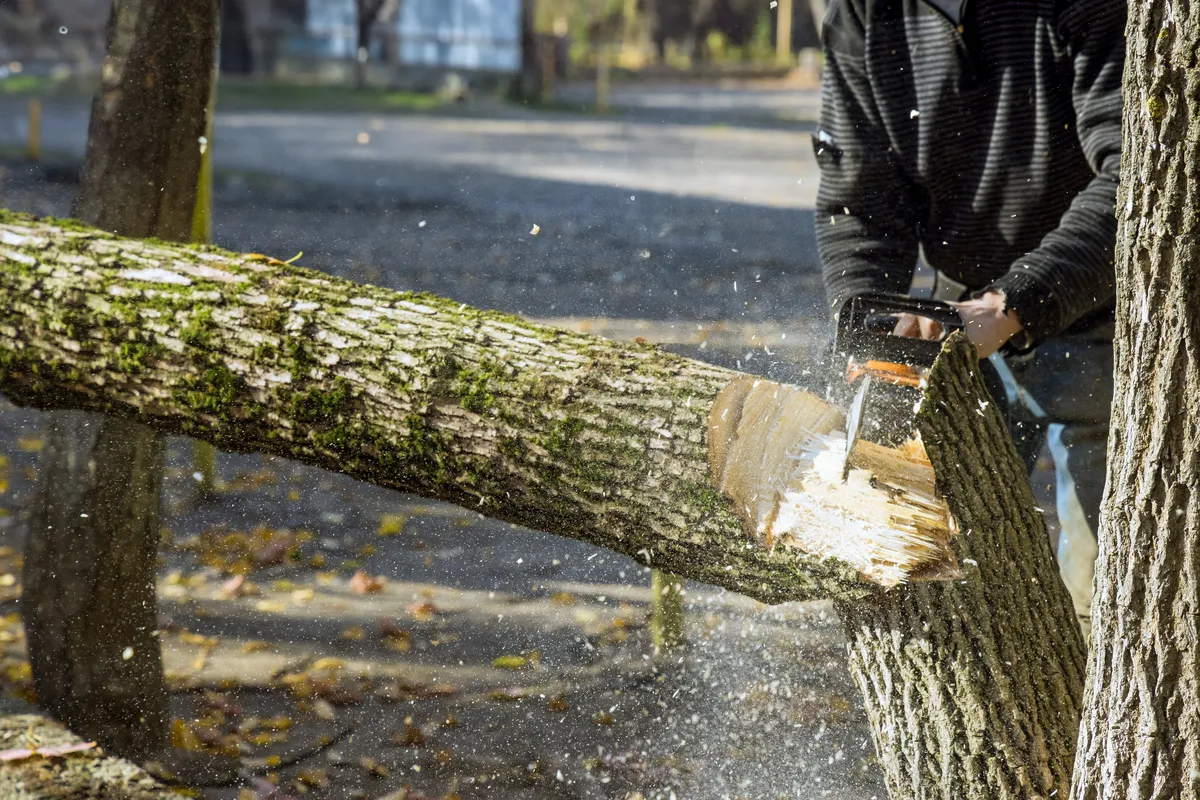
That sapling you planted ten years ago in your Dilworth backyard was the size of a broomstick. Now it is forty feet tall, its branches are brushing your roof, and its roots are cracking the edge of your driveway. Trees grow. It sounds obvious, but the number of Charlotte homeowners who end up dealing with a too-close tree shows that most people do not think far enough ahead when planting — or they inherit a problem from a previous owner who didn't think about it at all.
How close is too close depends on the species, the structure, and the soil. Charlotte's Piedmont clay makes all of this worse because roots tend to spread wide and shallow rather than diving straight down. Here is what you need to know about distance guidelines, warning signs, and what to do when a tree is already too close.
How Far Trees Should Be from Your House
The short answer: most trees should be at least 15 to 20 feet from your foundation. The real answer depends on the species.
Small ornamental trees like dogwoods, crepe myrtles, and Japanese maples can be as close as 10 feet from the house. Their root systems are modest and they stay small enough that branches will not reach your siding or roof. These are the trees tucked into foundation beds throughout Myers Park and Eastover, and they rarely cause trouble.
Medium trees like red maples and sweetgums need 15 feet minimum. Their root systems spread wider and their canopies get big enough to drop branches on your roof during storms. A red maple that looks manageable at fifteen feet tall is a different story at fifty.
Large trees are where the real problems start. Willow oaks, the most common large shade tree in Charlotte, should be 20 to 30 feet from any structure. Their root systems can extend 50 to 60 feet from the trunk in every direction. Loblolly pines, which grow fast and tall throughout the metro area, need at least 20 feet because their height makes them a falling hazard during storms. A 70-foot loblolly pine 15 feet from your house is a direct threat during every hurricane season.
These numbers are guidelines, not laws. A willow oak 18 feet from your house might never cause a problem. Another one at 25 feet might have roots that found a crack in your foundation and made it worse. Soil conditions, drainage, and individual growth patterns all matter. If you are not sure, an arborist consultation can tell you what is actually happening underground and overhead.
Trees and Your Driveway
Driveways take a beating from tree roots in Charlotte. The reason comes down to our red clay soil. In sandy or loamy soil, roots grow deeper because moisture drains downward and roots follow it. In Charlotte's heavy clay, moisture sits near the surface, and so do the roots. A root that would grow three feet deep in good soil might sit six to twelve inches deep in Piedmont clay. That puts it right at driveway level.
For concrete driveways, keep trees at least 10 feet away. For asphalt, which is more flexible and can tolerate some movement, 8 feet is usually enough for small trees. But for large species like oaks, you want 15 to 20 feet regardless of your driveway material.
Some trees are much worse for driveways than others:
- Willow oaks are the worst offenders. Their roots are aggressive, shallow, and spread wide. If you have one within 15 feet of your driveway in South End or Plaza Midwood, check for cracks.
- Silver maples have invasive roots that seek out moisture and can crack concrete from 20 feet away.
- Sweetgums spread roots close to the surface and are known for lifting driveways and sidewalks.
- Loblolly pines are less of a driveway problem because their roots are less aggressive, but they drop sap and needles that stain concrete.
If you already have root damage to your driveway or foundation, your options short of removal include root barriers — rigid panels installed vertically in the soil between the tree and the structure — and root pruning, where specific roots are cut. Both are worth discussing with a pro before committing to full tree removal.
Trees and Fences
Fences are cheaper to replace than foundations, but a tree growing into or against a fence is still a headache. For small trees and shrubs, 3 to 5 feet from the fence line is usually enough. For medium trees, keep them 6 to 8 feet away. For large trees like oaks and pines, 10 feet minimum.
The most common fence problems from trees in Charlotte:
- Trunk growth pushing against the fence. A tree planted 3 feet from a wooden fence will grow into it. The trunk widens every year, and within a decade the fence is pushed over or absorbed into the bark.
- Root heaving. Surface roots can lift fence posts out of the ground. This is common with privacy fences in Ballantyne and Weddington where big trees sit close to property-line fences.
- Branch weight. Branches growing over a fence add weight that can sag or break fence rails. Ice storms, which hit Charlotte every few years, make this worse.
- Debris buildup. Leaves and needles piling against a wooden fence trap moisture and speed up rot.
If a tree is already growing against your fence, trimming the branches back is the first step. For trunk contact, you may need to remove a fence section and reinstall it with a gap.
Warning Signs a Tree Is Too Close
Sometimes the tree is already there and you didn't get to pick the distance. Watch for these signs:
Foundation and structural signs:
- Cracks in your foundation, especially horizontal or stair-step cracks in brick
- Doors or windows that suddenly stick or will not close
- Cracks in interior walls near corners
- Uneven floors on the side of the house closest to the tree
Driveway and walkway signs:
- Cracks running parallel to where roots are growing
- Sections of concrete or asphalt that have lifted or become uneven
- Visible root humps under the driveway surface
Roof and siding signs:
- Branches touching or rubbing the roof, siding, or gutters
- Gutters constantly clogged with leaves on one side
- Moss or algae growing on the roof under the canopy
- Damaged shingles where branches scrape during wind
If you are seeing any of these, do not wait. Branches rubbing your roof during every windstorm do real damage, and a single large branch falling can cost thousands in repairs. Foundation issues only get worse as roots keep growing.
Charlotte's Clay Soil Makes It Worse
Charlotte's soil is a major factor in tree-versus-structure conflicts. The Piedmont red clay covering most of Mecklenburg County has two properties that create problems.
First, it forces roots shallow. Clay is dense and holds water near the surface. Roots follow the moisture and the path of least resistance, so instead of growing down through heavy clay, they spread out horizontally in the top 12 to 18 inches of soil. A willow oak in sandy coastal soil might keep its roots below two feet. The same tree in Charlotte clay has most of its root mass right at the surface.
Second, clay expands and contracts with moisture. During wet stretches it swells. During Charlotte's dry spells in late summer it shrinks and cracks. This seasonal movement stresses foundations, driveways, and other hard surfaces. Tree roots pull moisture from the soil and cause it to shrink unevenly. The side of your foundation closest to a large tree may settle differently than the other side, creating cracks.
Homeowners in newer subdivisions in Huntersville, Matthews, and Indian Trail sometimes have it especially bad. Construction strips away topsoil and leaves compacted clay subsoil. Trees planted in those conditions have nowhere to send roots except sideways, right toward your foundation.
What to Do When a Tree Is Already Too Close
If you have inherited a tree that is too close, your options depend on the severity.
Trimming and pruning. If the concern is branches over the roof, regular trimming keeps the canopy pulled back. Most large trees in Charlotte should be trimmed every 3 to 5 years. A tree service can maintain 5 to 10 feet of clearance between the canopy and your roof without hurting the tree. This is the least expensive option and the right first step if roots are not causing problems yet.
Root barriers. If roots are heading toward your foundation but have not caused damage yet, a root barrier can redirect them. These rigid panels get buried 2 to 4 feet deep between the tree and the structure. They cost $500 to $2,000 depending on the length needed. They work best when installed before damage starts.
Root pruning. Cutting specific problem roots can help, but it comes with risk. Cutting too many roots on one side can destabilize the tree, creating a new hazard. A tree that starts leaning after root pruning is more dangerous than roots under your driveway. Only a professional should make that call.
Removal. Sometimes the tree has to go. If roots have already damaged your foundation, if a 60-foot tree sits 10 feet from your house, or if the species is wrong for the location, removal may be the most practical answer. The cost of taking down a tree is almost always less than the cost of fixing a damaged foundation.
Planning Ahead
If you are planting new trees on your Charlotte property, here is a quick reference:
- Small trees (dogwoods, crepe myrtles, Japanese maples): 10 feet from the house, 5 feet from driveways and fences
- Medium trees (red maples, river birches, sweetgums): 15 feet from the house, 10 feet from driveways and fences
- Large trees (willow oaks, tulip poplars, loblolly pines): 20 to 30 feet from the house, 15 feet from driveways, 10 feet from fences
Also think about what is underground. Keep trees 10 feet from septic tanks and 20 feet from drain fields. Stay away from underground water and sewer lines — roots will find pipe joints and infiltrate them. In older Charlotte neighborhoods like NoDa and Plaza Midwood, where clay sewer lines are still common, tree roots clogging sewer pipes is one of the most frequent plumbing calls.
The right tree in the right spot gives you shade, adds property value, and never causes a problem. The wrong tree in the wrong spot costs thousands in structural repairs. A few minutes of planning now saves a lot of money later.
Worried About a Tree Too Close to Your Home?
Get a free quote from experienced Charlotte tree service companies. Whether you need trimming, root management, or removal, get matched with licensed, insured professionals.
Get a Free Quote