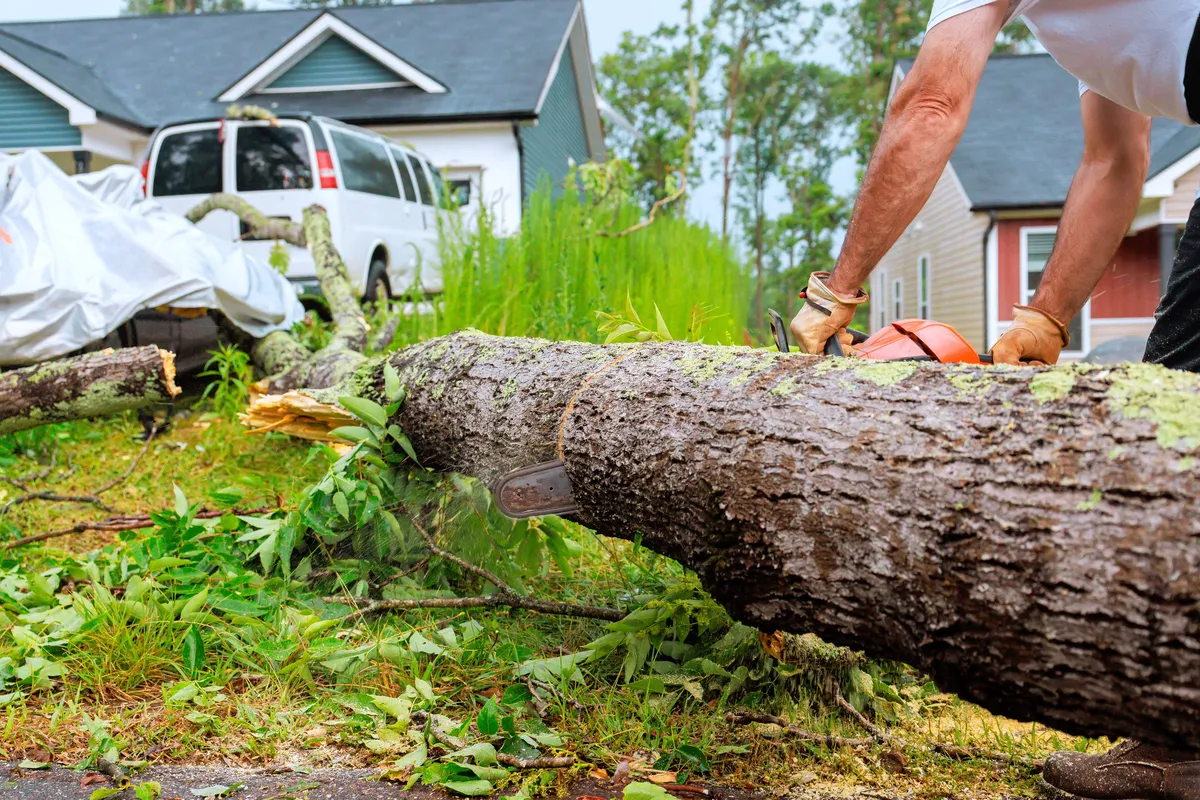
When a Charlotte homeowner says "I want to plant a shade tree," the follow-up question is usually about species. Red maple or willow oak? Tulip poplar or white pine? But before picking a species, it helps to understand the two major categories those species fall into — hardwoods and softwoods — because the differences affect everything from how fast your tree grows to how long it lives to how much it costs to remove.
The terms "hardwood" and "softwood" do not mean exactly what they sound like. Balsa wood is technically a hardwood. Southern yellow pine — hard enough to dent a hammer — is a softwood. The classification is actually botanical, not about how hard the wood feels. But for Charlotte homeowners making practical decisions about their yards, the general trends hold: most hardwoods are tougher, longer-lived, and slower-growing, while most softwoods are faster-growing, shorter-lived, and less expensive.
What Makes a Tree a Hardwood
Hardwoods are broadleaf trees — angiosperms, the flowering plants. They produce seeds in flowers or fruits. Most hardwoods in Charlotte are deciduous, dropping their leaves in fall and regrowing them in spring. A few, like Southern magnolia and live oak, are evergreen hardwoods that keep their leaves year-round.
Common hardwoods in Charlotte yards:
- Oaks — willow oak, white oak, red oak, pin oak, live oak
- Maples — red maple, sugar maple, Japanese maple
- Tulip poplar
- Sweetgum
- Hickory — pignut, shagbark, mockernut
- Dogwood
- Crepe myrtle
- Magnolia
- Elm
- Cherry — Yoshino cherry, black cherry
What Makes a Tree a Softwood
Softwoods are conifers — gymnosperms, the cone-bearing plants. They produce seeds in cones instead of flowers. Most softwoods are evergreen, keeping their needles year-round. The exception in Charlotte is bald cypress, a deciduous conifer that drops its needles in fall.
Common softwoods in Charlotte yards:
- Loblolly pine — the dominant pine in the Piedmont
- Virginia pine
- Longleaf pine
- White pine — Eastern white pine
- Leyland cypress
- Eastern red cedar
- Bald cypress
- Arborvitae
- Cryptomeria
Growth Rate
Softwoods generally grow faster than hardwoods. Loblolly pine — Charlotte's most common softwood — grows 2 to 3 feet per year and can reach 50 feet in 20 years. Leyland cypress grows even faster, adding 3 to 4 feet per year. This fast growth is why developers and homeowners plant softwoods when they want quick results — a privacy screen, a windbreak, or a buffer between properties.
Hardwoods are slower. White oak grows about 1 foot per year. Red maple grows 1 to 2 feet per year. Willow oak is an exception — it grows 2 to 3 feet per year, which is fast for a hardwood. Tulip poplar is another fast grower at 2 to 3 feet annually.
If you need shade or screening within 5 years, softwoods (or fast hardwoods like willow oak) are the practical choice. If you are planting for the next 50 years and can wait, slower hardwoods like white oak and hickory are worth the patience. For a full breakdown, see our guide on the best shade trees for Charlotte.
Lifespan
This is where hardwoods pull ahead decisively. Most hardwoods outlast most softwoods by decades — sometimes centuries.
Hardwood lifespans in Charlotte:
- White oak: 200 to 500+ years
- Willow oak: 80 to 100 years
- Red maple: 60 to 80 years
- Hickory: 150 to 300 years
- Tulip poplar: 80 to 150 years
- Dogwood: 40 to 80 years
Softwood lifespans in Charlotte:
- Loblolly pine: 80 to 120 years (but many develop problems by 50 to 60)
- Virginia pine: 40 to 60 years
- Leyland cypress: 20 to 30 years (they decline fast after 25)
- Eastern red cedar: 100 to 300 years
- Bald cypress: 200 to 600 years
- White pine: 80 to 200 years
Leyland cypress is worth calling out specifically. It is one of the most planted trees in Charlotte for privacy screening, and it is one of the shortest-lived. Many Leyland cypresses planted in the 1990s and early 2000s are already dead or declining from disease (Seiridium canker, Botryosphaeria canker). Homeowners who planted them for a quick screen are now paying for removal. For long-lived screening, Eastern red cedar or a row of hollies are better investments.
Storm Resistance
Hardwoods are generally more wind-resistant than softwoods. Their wood is denser and their branch attachments are stronger. During Charlotte's summer thunderstorms and occasional hurricanes, pines are the trees most likely to snap or blow over. Loblolly pines in particular have a reputation for breaking — they grow tall with a narrow canopy, and their wood has a lower breaking strength than most hardwoods.
Oaks and hickories are among the most storm-resistant trees in the Charlotte area. Their dense wood and deep root systems keep them standing through conditions that topple pines. Regular pruning helps both categories resist wind, but hardwoods start with a structural advantage.
There are exceptions. Sweetgum (hardwood) has relatively brittle wood. Bradford pear (hardwood) is notoriously weak. And some softwoods — bald cypress, longleaf pine — are quite storm-resistant. But in general, a well-established hardwood survives severe weather better than a comparable softwood.
Maintenance Needs
Hardwood Maintenance
Hardwoods need periodic pruning to maintain shape and remove dead wood. Most hardwoods benefit from a pruning cycle every 3 to 5 years once mature. Leaf cleanup in fall is a significant task — large oaks and maples drop massive quantities of leaves. Some hardwoods produce other debris: sweetgum balls, oak acorns, hickory nuts, magnolia seed pods.
Hardwoods are also susceptible to a wider range of diseases and pests than most softwoods. Oak care includes watching for oak wilt, bacterial leaf scorch, and various cankers. Dogwoods are vulnerable to anthracnose and powdery mildew. These problems are manageable but require attention.
Softwood Maintenance
Pines drop needles year-round — a slow, continuous rain of needles that builds up on roofs, in gutters, and on the ground. Pine needle cleanup is less labor-intensive than leaf raking but more constant. Pine sap is another issue — it drips on cars, decks, and anything parked under the tree.
Softwoods need less pruning than hardwoods. Pine branches that are removed do not grow back (the tree does not produce new buds on old wood), so pruning is limited to removing dead or problem branches. Leyland cypress needs shearing to maintain shape as a screen, which becomes a bigger task every year as the trees grow.
Pine bark beetles are the biggest pest threat to Charlotte's softwoods. Stressed pines — from drought, compaction, or root damage — are vulnerable to bark beetle infestations that can kill the tree in weeks. For more on pine tree issues, see our pine removal guide.
Property Value Impact
Mature hardwoods add more to property value than mature softwoods. A large white oak or willow oak in good condition can add $5,000 to $15,000 to a home's appraised value. Pines are valued less — $1,000 to $3,000 for a large, healthy specimen. This is partly because hardwoods are rarer (they take longer to grow), partly because they are more attractive, and partly because buyers associate mature hardwood canopy with established, desirable neighborhoods.
That said, a lot with no trees at all is worth less than a lot with pines. Trees are trees, and any mature canopy is better than none for curb appeal and property value.
Removal Cost Differences
Softwoods are generally cheaper to remove than hardwoods. Pine wood is lighter and less dense, so the crew handles it faster. The branches are easier to cut and the logs are lighter to move. A 60-foot loblolly pine might cost $800 to $1,500 to remove.
Hardwood removal costs more because the wood is heavier, the branches are thicker, and the cutting takes more time and effort. A 60-foot willow oak might cost $1,500 to $3,500 to remove. Large oaks and other hardwoods with heavy, spreading canopies near structures are the most expensive residential removals. Land clearing projects with a mix of hardwoods and softwoods price the work accordingly.
Best Uses for Each in Charlotte Yards
Plant hardwoods for:
- Long-term shade (oaks, maples, tulip poplar)
- Property value and curb appeal (white oak, red maple, dogwood)
- Fall color (red maple, sweetgum, hickory)
- Spring flowers (dogwood, cherry, redbud)
- Wildlife habitat (oaks, hickories produce food for birds and squirrels)
Plant softwoods for:
- Quick privacy screening (Leyland cypress — but know the lifespan, green giant arborvitae is better)
- Year-round green color and screening (Eastern red cedar, white pine)
- Fast growth when you need results quickly (loblolly pine)
- Wet sites (bald cypress thrives in areas too wet for most hardwoods)
- Windbreaks along property lines
The best Charlotte yards have a mix. A couple of large hardwoods for shade and character, softwoods for screening and winter green, and smaller ornamental trees (dogwood, crepe myrtle, redbud) for seasonal interest. That mix gives you year-round coverage, a layered landscape, and trees at different stages of maturity so you are never left with a bare lot.
Need Help Choosing Trees?
Get expert advice from Charlotte arborists on the best trees for your yard. Free consultations available for planting, pruning, and removal decisions.
Get a Free Quote