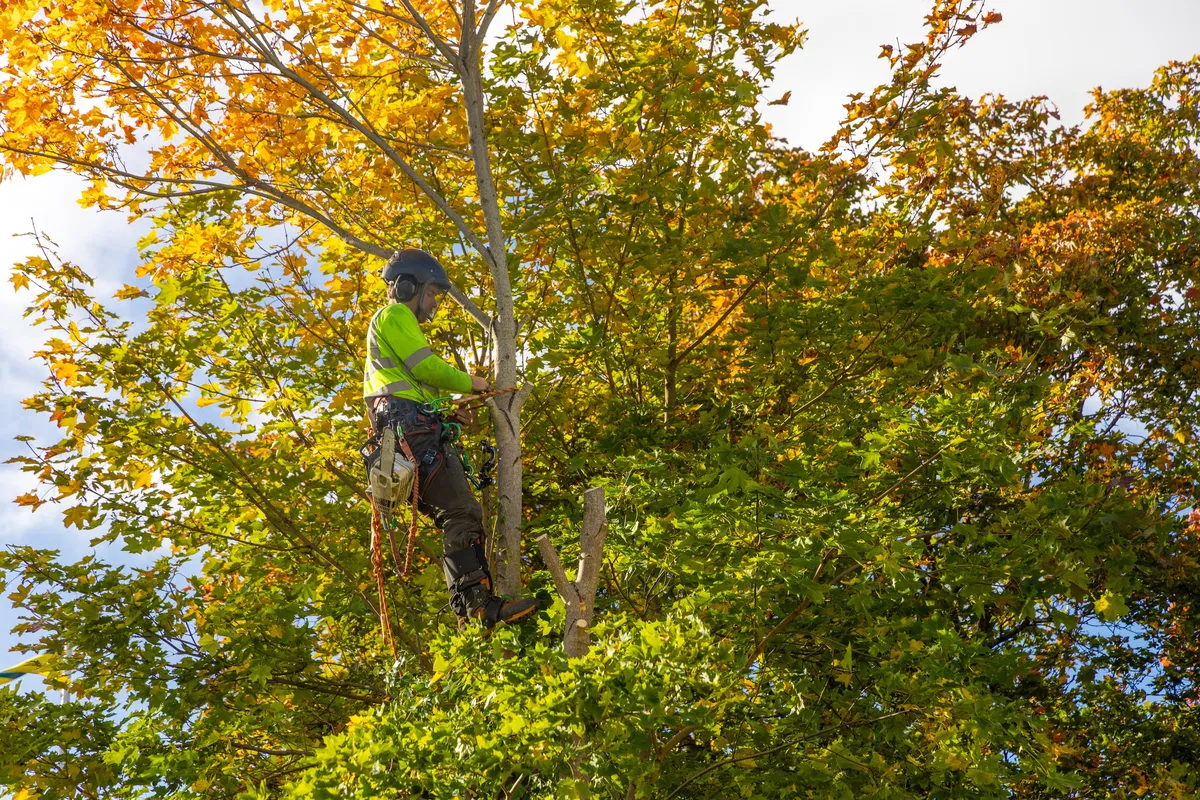
Most Charlotte homeowners use the words trimming and pruning interchangeably. Even some tree service companies use them as if they mean the same thing. They don't. The difference matters because the two services have different goals, different techniques, and different price tags — and getting the wrong one can hurt your trees.
Here is what each one actually means, when you need which, and how to tell a good job from a bad one.
What Is Tree Trimming?
Trimming is about controlling size and shape. When branches are hanging over your roof, blocking your driveway, growing into power lines, or making your yard look like a jungle, that is a trimming job. The goal is to cut the tree back so it fits the space around it.
Trimming focuses on the outer canopy — the tips and ends of branches that have grown beyond where you want them. A tree trimming crew will shorten branches, reduce the overall canopy size, and create clearance between the tree and structures, walkways, or sight lines.
Common reasons Charlotte homeowners need trimming:
- Branches touching or hanging over the roof
- Canopy blocking a driveway, sidewalk, or street
- Tree growing into the neighbor's yard or fence line
- Overgrown look that is dragging down curb appeal
- Branches blocking sunlight from reaching the lawn or garden
- Height reduction on a tree that has gotten too tall for its location
Trimming is the more common service for residential properties in Charlotte. Most homeowners call a tree company because something is growing where it should not be, and they want it cut back.
What Is Tree Pruning?
Pruning is about tree health and structure. Instead of cutting back the outer canopy for size, pruning involves selectively removing specific branches to help the tree grow better, live longer, and resist damage. Think of trimming as a haircut and pruning as surgery.
A good pruning job targets:
- Dead branches. Dead wood should be removed because it falls unpredictably and can damage whatever is below it.
- Diseased branches. Cutting out infected limbs can stop disease from spreading to the rest of the tree.
- Crossing branches. When two branches rub against each other, they create wounds that invite disease and insects. The weaker one gets removed.
- Codominant stems. Two main trunks growing from the same point with a narrow V-shaped crotch are a structural weakness. Pruning one back while the tree is young prevents a split later.
- Water sprouts and suckers. Those clusters of thin, fast-growing vertical shoots that pop up along branches or at the base are wasting the tree's energy and should be removed.
- Interior crowding. Thinning out the interior of the canopy lets air and light through, which reduces fungal disease and helps the whole tree.
Pruning requires more knowledge than trimming. The person making the cuts needs to understand tree biology — where to cut, how much to take, and what the tree needs based on its species and condition. An arborist is trained in this. A general landscaping crew may not be.
When You Need Trimming
Trimming is reactive — something has grown too far, too wide, or too tall, and you need it cut back. In Charlotte, the most common triggers are:
Branches over the roof. Charlotte's fast-growing trees, especially willow oaks and loblolly pines, can reach your roofline within 10 to 15 years of planting. Once branches are scraping shingles or dropping leaves into gutters, it is time to trim. Most tree companies recommend maintaining at least 5 to 10 feet of clearance between the canopy and your roof.
Storm prep. Before hurricane season or winter ice storms, trimming back heavy branches that overhang your house, car, or deck reduces the risk of damage. Late winter through early spring is the best window for this in Charlotte.
Sight line clearance. Trees blocking sight lines at driveways and intersections are a safety issue. Charlotte has no specific ordinance requiring homeowners to trim for sight lines, but you can be held liable if an overgrown tree on your property contributes to an accident.
Aesthetics. An overgrown, shaggy canopy makes a house look neglected. Regular trimming every 3 to 5 years keeps everything looking maintained.
When You Need Pruning
Pruning is proactive — you are doing work now to prevent problems later. The most common situations in Charlotte:
Young trees that need shaping. The most important time to prune a tree is in the first 5 to 10 years after planting. This is when you establish good structure — one central leader, well-spaced scaffold branches, no narrow crotch angles. A young willow oak that gets proper structural pruning will be stronger and safer for decades. One that doesn't may develop codominant stems that split apart in a storm thirty years later.
Dead or dying branches. Deadwood removal is the most basic form of pruning and the most universally needed. Every mature tree in Charlotte has some dead branches. They should come out before they fall on someone's car, deck, or head.
Disease management. If your tree has anthracnose, fire blight, or another infection, pruning out the affected branches can keep the disease from spreading. The cuts need to be made correctly — at least 12 inches below visible infection, with tools sterilized between cuts.
Canopy thinning. Charlotte's humid summers create perfect conditions for fungal diseases. Thinning the interior of the canopy by 15 to 20 percent improves airflow and reduces moisture on leaf surfaces. This is especially important for crepe myrtles, dogwoods, and other species prone to powdery mildew and leaf spot.
What Good Trimming Looks Like vs What Bad Trimming Looks Like
Good trimming reduces the canopy while leaving the tree looking natural. The cuts are made at branch junctions, not in the middle of branches. The tree keeps its natural shape — just smaller and more contained.
Bad trimming looks like someone attacked the tree with hedge clippers. The worst offenses common in Charlotte:
- Topping. Cutting the top off a tree to reduce its height. This is the single worst thing you can do to a tree. It causes a flush of weak water sprout growth, creates decay entry points, and actually makes the tree more dangerous long-term because the new growth is poorly attached. If a company offers to top your trees, find a different company.
- Lion-tailing. Stripping all the interior branches and leaving tufts of foliage only at the branch tips. This looks like a lion's tail — bare branch with a poof at the end. It shifts all the weight to the tips, making branches more likely to break in wind.
- Flush cuts. Cutting branches off flush against the trunk, removing the branch collar. The branch collar is the swollen area where the branch meets the trunk, and it contains the tree's wound-healing tissue. Cut it off and the wound may never close properly.
- Stub cuts. The opposite of flush cuts — leaving long stubs sticking out from the trunk. Stubs die back and become entry points for decay and insects.
The crepe myrtle is the most commonly butchered tree in Charlotte. Every February, you see crews chopping them down to bare trunks — a practice called "crepe murder." It produces a flush of thin, weak branches and ruins the tree's natural form. Proper crepe myrtle pruning is selective, removing only crossing branches, suckers, and spent seed pods.
Cost Differences
Trimming is generally less expensive than pruning because it is faster and requires less expertise. In the Charlotte market:
- Trimming a medium-sized tree (30 to 50 feet) typically costs $200 to $600. Large trees (50+ feet) run $400 to $1,200.
- Pruning the same trees costs 20 to 40 percent more because it takes longer and requires more skill. A medium tree might run $300 to $800 for a full pruning job. Large trees can run $500 to $1,500.
Many tree companies offer both services, and a good one will recommend the right service for your situation rather than just doing what you ask. If you call for trimming but the tree really needs pruning, a reputable company will tell you.
Timing Matters
The best time for both trimming and pruning in Charlotte is during the dormant season — late November through early March. Trees are not actively growing, so the cuts cause less stress. You can also see the branch structure clearly without leaves blocking the view, which makes it easier to spot problems and make better cuts.
There are exceptions. Spring-flowering trees like dogwoods, redbuds, and cherry trees should be trimmed or pruned right after they finish blooming, usually in late April or May. If you do it during winter, you cut off the flower buds and lose that spring's bloom. For the full species-by-species breakdown, see our guide on the best time to trim trees in Charlotte.
Avoid heavy trimming or pruning during the peak of Charlotte's summer (June through August). The heat already stresses trees, and making major cuts during this time can push a stressed tree over the edge. Emergency deadwood removal is fine any time of year, but save the big jobs for cooler months.
Which One Do You Need?
Ask yourself one question: Why do you want work done on the tree?
If the answer is about space — branches are where they should not be, the tree is too big, it is blocking something — you need trimming.
If the answer is about the tree itself — dead branches, disease, poor structure, concerns about safety — you need pruning.
Most mature trees in Charlotte benefit from a combination of both. A good tree service visit might include pruning out deadwood and crossing branches, then trimming back the canopy to create clearance from the house. When you request a quote for tree trimming, mention any health or structural concerns you have, and the crew can address both in the same visit.
Need Tree Trimming or Pruning in Charlotte?
Get a free quote from experienced Charlotte tree service companies. Get matched with licensed, insured professionals who know the difference and do the job right.
Get a Free Quote