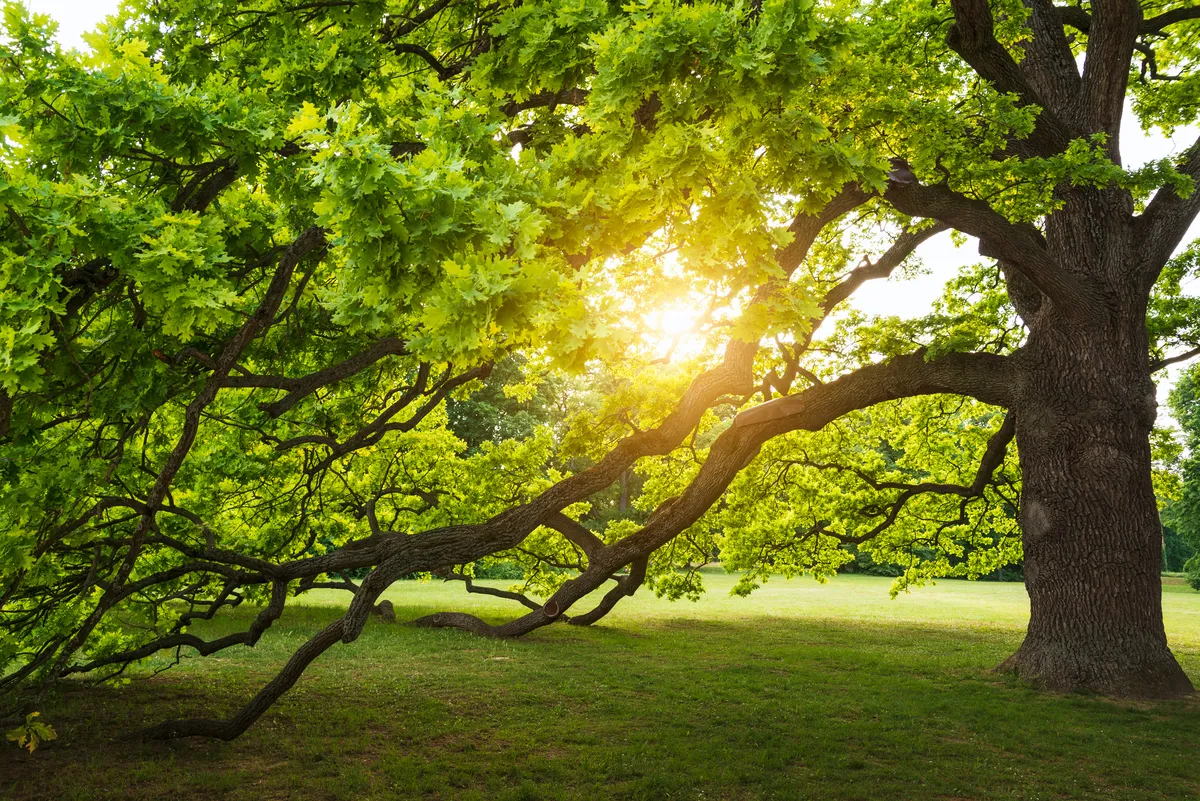
Charlotte gets about 43 inches of rain per year. That sounds like plenty of water for trees. And in most years, established trees do fine without any supplemental watering. But Charlotte's rain does not fall evenly. Summer droughts are common — sometimes two to four weeks with little or no rain, combined with temperatures in the mid-90s. That combination stresses even mature, well-rooted trees.
New trees are even more vulnerable. A tree planted in the last two years does not have the root system to pull moisture from deep soil layers. It depends on water in the top 12 to 18 inches of soil, which dries out fast during Charlotte summers.
Watering trees correctly is not complicated, but most homeowners either do it wrong or do not do it at all. Here is how to water trees in Charlotte based on the actual soil and climate conditions.
Charlotte's Soil Problem
The Piedmont region sits on a layer of red clay — heavy, dense soil that drains slowly when wet and turns rock-hard when dry. This creates a specific challenge for tree watering that is different from sandy coastal soils or the loamy soils of the Midwest.
When clay is dry, water runs off the surface instead of soaking in. You can run a hose on dry clay for ten minutes and the water will puddle, flow downhill, and barely penetrate the first inch. The soil actually becomes water-repellent. This is why a quick daily sprinkle does nothing for trees — the water never reaches the root zone.
When clay is wet, it holds water for a long time. Clay particles are tiny and pack together tightly, trapping moisture. This is good for trees during normal conditions — clay soil retains moisture longer than sandy soil. But after heavy rain, clay can stay saturated for days, and tree roots sitting in waterlogged clay can suffocate and develop root rot.
The trick with Charlotte's clay is slow, deep watering — getting water to soak down 12 to 18 inches without flooding the surface. For more on how Charlotte's soil affects trees, see our article on red clay and tree health.
Watering Newly Planted Trees (0 to 2 Years)
The first two years after planting are critical. The tree's root ball is still small — roughly the size of the container or burlap ball it came in. That root ball needs to stay moist (not soaked, not dry) while new roots grow out into the surrounding soil.
First Month After Planting
Water every other day for the first two to four weeks. Apply 2 to 3 gallons each time for a tree with a 1-inch trunk diameter, or 5 to 7 gallons for larger trees (2 to 3 inch trunk). Water slowly — let it soak in rather than run off. A slow trickle from a garden hose or a 5-gallon bucket with a few holes drilled in the bottom works well.
Focus the water on the original root ball, not the surrounding soil. The new roots have not grown out yet, so water 6 to 12 inches from the trunk, directly over the root ball.
Months 2 Through 12
Reduce frequency to twice a week during the growing season (April through October). Increase the volume to 5 to 10 gallons per watering for a small tree, 10 to 15 gallons for larger specimens. Water in a wider ring now — 18 to 24 inches from the trunk — because the roots are starting to spread.
During Charlotte's hot summer months (June through September), you may need to water three times a week if there is no rain and temperatures are above 90 degrees. Watch the tree — wilting leaves, drooping tips, and leaf scorch (brown edges) are signs it needs more water.
Year 2
Water once or twice a week during the growing season, with deep soakings of 10 to 15 gallons. By now the root system has expanded significantly, so water in a ring 2 to 3 feet from the trunk. During dry spells, keep watering. During rainy periods, skip it — you do not want to overwater.
After two full growing seasons in the ground, most trees are established enough to handle normal Charlotte conditions without supplemental watering. But they still benefit from deep watering during extended dry periods.
Watering Established Trees (3+ Years)
Established trees in Charlotte usually do not need supplemental watering except during drought. Their root systems reach 2 to 3 times the canopy width and pull moisture from deep soil layers that stay moist long after the surface dries out.
But Charlotte does get droughts. When it has not rained significantly in two weeks and daytime temperatures are in the 90s, even established trees benefit from deep watering. Signs that an established tree needs water:
- Wilting leaves in the afternoon that recover by morning (temporary wilt)
- Leaves curling along the edges or folding inward
- Leaf scorch — brown, crispy edges on otherwise green leaves
- Early leaf drop — leaves falling in July or August when they should not
- Dull color — leaves that look gray-green instead of vibrant green
For more on summer stress symptoms, see our article on tree heat stress in Charlotte.
When watering an established tree during drought, water slowly and deeply at the drip line — the outer edge of the canopy, where the branch tips are. This is where the absorbing roots are concentrated. Do not water at the trunk base — the roots that take up water are farther out. Apply 10 to 15 gallons per inch of trunk diameter. A tree with a 12-inch diameter trunk needs 120 to 180 gallons per deep watering session.
That sounds like a lot. A soaker hose or slow-running garden hose laid in a circle at the drip line for 2 to 3 hours will deliver that amount. Water once a week during drought conditions. One deep soak per week is far more effective than daily light sprinkling.
The Best Watering Methods
Soaker Hose
A porous rubber hose that weeps water along its entire length. Lay it in a circle around the tree at the drip line and run it for 1 to 3 hours at low pressure. This is the most effective method for established trees because it delivers water slowly enough to soak into clay soil without runoff.
Drip Line / Tree Watering Bags
For newly planted trees, slow-release watering bags (like Treegator) are excellent. You fill the bag, zip it around the trunk, and it releases water over 6 to 8 hours. This delivers water slowly enough for clay soil to absorb it. Refill the bag 2 to 3 times per week during the growing season.
Garden Hose at a Trickle
Set the hose to a slow trickle — barely more than a drip — and move it around the tree every 20 to 30 minutes. This is the simplest method but requires you to be present and move the hose. Total time: 1 to 2 hours per tree.
Sprinklers
Lawn sprinklers are the least effective way to water trees. They apply water to the surface quickly, which leads to runoff on clay soil. Most of the water evaporates or runs off before it can soak to root depth. If you use a sprinkler, run it for a long time (1 to 2 hours) to get any real water into the soil.
Common Watering Mistakes
Watering Too Often and Too Shallow
The most common mistake in Charlotte. Running the lawn sprinkler for 15 minutes every day puts a quarter inch of water on the surface. That water never gets past the first 2 inches of soil. The tree's roots are 12 to 18 inches down. Daily light watering encourages shallow root growth — roots stay near the surface chasing that shallow moisture instead of growing deep. Shallow-rooted trees are more vulnerable to drought and more likely to blow over in storms.
Watering at the Trunk
Piling mulch against the trunk and then watering it creates a wet environment that encourages bark decay, root rot, and fungal infections. The trunk base should stay dry and exposed. Water at the drip line, not the trunk.
Overwatering in Winter
Charlotte's winters are wet. November through March, the region usually gets enough rain to keep soil moisture adequate. Trees that are dormant need far less water than trees that are actively growing. Supplemental watering in winter is almost never necessary and can lead to root rot, especially in clay soil that already drains slowly.
Ignoring Drought Signs
Charlotte homeowners water their lawns religiously but forget about their trees. A mature tree is worth $3,000 to $15,000 in property value. Losing it to drought stress — something that costs $20 in water to prevent — is a bad trade.
Mulching and Watering
A 3 to 4 inch layer of mulch in a ring around the tree (starting 6 inches from the trunk and extending to the drip line) reduces evaporation, keeps the soil cooler, and helps water penetrate clay soil. Mulch makes every watering session more effective.
The combination of mulching and proper watering is the single best thing you can do for a tree's health in Charlotte's climate. An arborist can help you determine how much supplemental watering your specific trees need based on species, soil conditions, and site drainage.
Species That Need More Water
Some common Charlotte trees are thirstier than others:
- River birch — naturally grows along streams. Needs consistent moisture. First to show stress in drought.
- Willow oak — tolerates dry spells but performs best with regular moisture
- Red maple — shallow roots dry out faster than deep-rooted species
- Dogwood — understory tree that struggles in full sun and heat. Needs extra water when planted in open, exposed locations.
- Japanese maple — not native, and Charlotte's heat is at the edge of its comfort zone. Needs afternoon shade and consistent moisture.
Drought-tolerant Charlotte trees that need less supplemental watering include white oaks, post oaks, cedar elms, and Chinese pistache. If you are planting in a spot where watering will be difficult, choose drought-tolerant species.
How to Know the Growth Is Good
A well-watered tree shows it. New shoots are vigorous — 6 to 12 inches of new growth per year on young trees. Leaves are full-sized with deep green color. The canopy is dense and even. If your tree is putting on good growth and the leaves look healthy, your watering routine is working.
Need Tree Care Advice?
Get a free consultation from Charlotte tree service professionals. From watering to pruning to health assessments, get expert advice for your trees.
Get a Free Quote