Southern magnolias are one of the most recognizable trees in Charlotte. Their glossy dark green leaves, white dinner-plate-sized flowers, and year-round presence make them a fixture in older neighborhoods like Dilworth, Myers Park, and Eastover. They look like they belong on a postcard. What the postcard does not show is the constant rain of thick, leathery leaves that cover your yard twelve months a year, the seed pods that litter the ground every fall, and the branches that grow low enough to swallow your lawn mower.
Magnolias are beautiful trees. They are also high-maintenance trees. Here is what it takes to keep one looking good in Charlotte, and when to call in help.
Types of Magnolias in Charlotte
Charlotte has three main types of magnolias, and each has different maintenance needs:
Southern magnolia (Magnolia grandiflora). This is the big one — the classic evergreen magnolia that grows 50 to 80 feet tall with a canopy spread of 30 to 50 feet. It keeps its leaves year-round and produces those large white flowers from May through July. This is the magnolia that lines Queens Road and fills the front yards of Charlotte's oldest neighborhoods. It is also the one that creates the most maintenance work.
Sweetbay magnolia (Magnolia virginiana). A smaller, more refined option that grows 15 to 30 feet tall. In Charlotte's zone 7b/8a, sweetbay magnolia is semi-evergreen — it holds most of its leaves in mild winters but drops them during cold snaps. The flowers are smaller and more fragrant than Southern magnolia. Much less messy and much easier to maintain.
Saucer magnolia (Magnolia x soulangeana). The deciduous magnolia that puts on a spectacular pink or white flower show in early spring before the leaves emerge. It grows 20 to 25 feet and drops its leaves in fall like any other deciduous tree. Maintenance is minimal compared to the evergreen types.
Most of the maintenance questions in Charlotte center on Southern magnolias, so that is what we will focus on.
The Leaf Drop Issue
Southern magnolias are evergreen, but that does not mean they keep the same leaves forever. They shed old leaves year-round, with the heaviest drop in April and May when new growth pushes out the previous year's leaves. During spring leaf drop, a large Southern magnolia can blanket a yard with hundreds of thick, waxy leaves every day for three to four weeks.
These are not lightweight leaves. Magnolia leaves are thick, tough, and slow to decompose. They do not break down in a mulch pile like oak leaves do. They sit on your lawn, in your gutters, and on your garden beds in stiff brown curls for months unless you remove them.
Your options for dealing with magnolia leaf drop:
- Rake frequently during peak drop. April through early June is the worst. Raking twice a week during this period keeps the yard from looking buried.
- Mulch the leaves under the tree. Many Charlotte homeowners let fallen leaves accumulate naturally under the magnolia's canopy, creating a self-mulching bed. This actually mimics how magnolias grow in the wild and reduces maintenance. The leaf layer suppresses weeds and retains moisture. If you go this route, just keep the leaf layer from piling against the trunk.
- Mow over scattered leaves. A mulching mower can chop magnolia leaves into pieces that break down faster. This works for leaves on the lawn but not for the thick accumulation under the tree.
How to Prune a Southern Magnolia
Magnolias have a naturally attractive pyramidal shape, and the less you prune them, the better they look. Heavy pruning ruins their form and they are slow to fill back in. That said, there are several situations where pruning is needed:
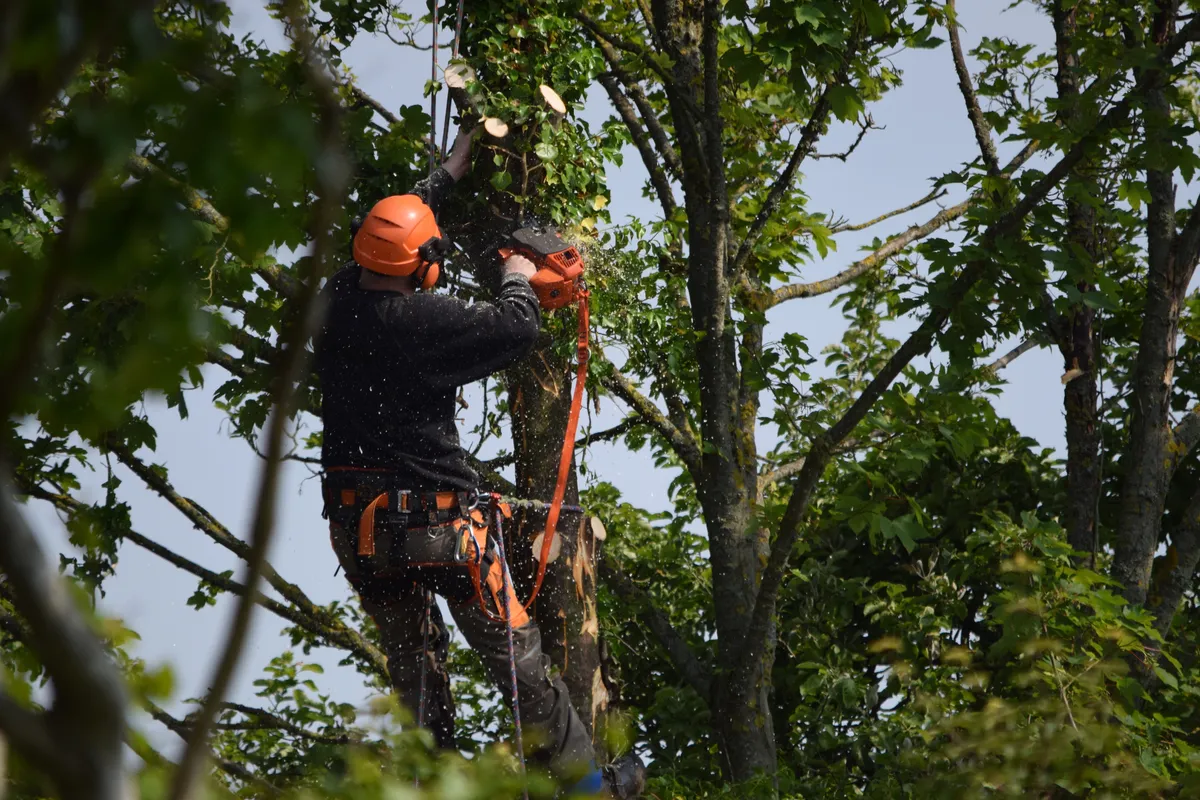
Raising the canopy. Southern magnolias naturally grow branches all the way to the ground. This looks great in a park setting but creates problems in a residential yard — you cannot walk under the tree, you cannot mow under it, and the low branches block views and paths. Removing the lowest branches to raise the canopy 6 to 8 feet off the ground is the most common magnolia pruning job in Charlotte. This should be done gradually over several years, removing only one or two tiers of branches per year.
Removing dead or damaged branches. Like any tree, dead branches should come out when you spot them. Magnolia wood is dense but can develop dead branches from shade, storm damage, or disease. For a guide on recognizing dead branches, see the best time to trim trees in Charlotte.
Size control. This is where people get into trouble. You cannot cut a 60-foot magnolia down to 30 feet and expect it to look normal. Topping a magnolia produces ugly stubs and weak regrowth. If the tree is too large for its space, the honest answer is that it is the wrong tree for that location and should be replaced with something smaller — or you need to accept its size and manage around it.
When to prune: Late spring to early summer (May through June), after the spring leaf drop and flowering are finished. This gives the tree the full growing season to heal. Avoid pruning in fall or winter — magnolias heal slowly and cold-season wounds can lead to dieback. An arborist can handle larger pruning jobs safely.
Common Magnolia Problems in Charlotte
Scale Insects and Sooty Mold
The most common pest problem on Charlotte magnolias is magnolia scale — small, flat, brownish insects that attach to branches and suck sap. By itself, scale is not usually fatal. But the sticky honeydew that scale insects excrete attracts a black fungus called sooty mold, which coats leaves and branches in a layer of black grime. The sooty mold blocks light from reaching the leaves and makes the tree look terrible.
Treatment: Horticultural oil applied during the dormant season (winter) smothers scale insects and their eggs. For heavy infestations, a systemic insecticide applied in spring can control the population. Sooty mold washes off gradually after the scale is eliminated. For more on tree diseases and pests in Charlotte, see our full guide.
Leaf Spot
Various fungal leaf spots affect magnolias during humid Charlotte summers. You will see brown or black spots on the leaves, sometimes with yellow halos. Mild cases are cosmetic only. Severe cases can cause early leaf drop. Improve air circulation by thinning interior branches, and clean up fallen leaves to reduce fungal spores.
Cold Damage
Southern magnolias are marginally hardy in Charlotte's zone 7b. Most winters are fine, but during the occasional cold snap into the single digits, magnolias can suffer leaf burn (brown, dried leaves) or branch dieback, especially on young trees. Do not prune cold-damaged branches until late spring — what looks dead in February may push new growth in April. The tree often recovers on its own.
Surface Roots
Magnolias develop extensive surface roots, especially in Charlotte's clay soil. These roots spread beyond the canopy and can lift walkways, crack driveways, and make mowing difficult. There is no good fix for surface roots on an established magnolia other than mulching over them and avoiding the area with foot traffic and equipment.
The "Little Gem" Alternative
If you love the look of Southern magnolias but do not want a 60-foot tree, the "Little Gem" cultivar is the most popular compact variety planted in Charlotte. It grows 20 to 25 feet tall, blooms heavily starting at a young age, and has the same glossy leaves and white flowers as the full-sized version. The smaller size means less leaf drop, easier pruning, and a tree that fits better on suburban lots.
Other compact cultivars worth considering: "Teddy Bear" (15 to 20 feet, very compact), "Bracken's Brown Beauty" (30 to 40 feet, excellent cold hardiness), and "D.D. Blanchard" (40 to 50 feet, outstanding glossy foliage).
When to Call a Professional
You can handle raking leaves and light pruning yourself. Call a professional when:
- The canopy needs raising and you are cutting branches larger than 3 inches in diameter
- Dead or damaged branches are high in the canopy and require climbing or a bucket truck
- Scale and sooty mold are severe and need treatment
- The tree appears to be in decline — thinning canopy, excessive dieback, or general poor health
- Storm damage has left broken or hanging branches
Magnolias are worth the effort. A healthy, well-maintained Southern magnolia is one of the most impressive trees you can have in a Charlotte yard. They live 80 to 100 years or more, they provide year-round green, and those flowers in May are worth every bag of raked leaves. Just go in with your eyes open about the maintenance commitment.
Need Help with Your Magnolia Tree?
Get a free quote from experienced Charlotte tree service companies. Whether your magnolia needs pruning, treatment, or assessment, get matched with licensed, insured professionals.
Get a Free Quote